











Women’s scrub jackets can help healthcare workers stay comfortable in cool clinics, exam rooms, hospitals, dental offices, veterinary settings, labs, and front-desk areas. Nurses, CNAs, medical assistants, dental staff, veterinary teams, healthcare students, and clinic employees often need a layer that adds warmth without restricting movement or looking too casual.
A good scrub jacket should fit comfortably over scrub tops, support shoulder and arm movement, provide practical storage, and follow workplace dress code rules. Workers comparing women’s scrub jackets should review fabric weight, sleeve fit, pocket layout, closure style, color requirements, laundering needs, and how the jacket feels during real clinical movement.
Quick Answer
The best women’s scrub jackets are comfortable, professional, easy to layer, and practical for daily healthcare work. Buyers should check shoulder mobility, sleeve length, jacket length, fabric warmth, pocket placement, zipper or snap closure, workplace-approved colors, laundering instructions, and whether the jacket fits properly over scrub tops or underscrubs.
Healthcare workers choosing women’s scrub jackets should review:
- Shoulder and upper-back movement
- Sleeve length and cuff comfort
- Jacket length and coverage
- Fabric warmth and breathability
- Zip, snap, or button closure
- Pocket number and placement
- Stretch and fabric recovery
- Layering over scrub tops
- Fit under lab coats, if needed
- Workplace-approved colors
- Embroidery requirements
- Care instructions before buying multiple jackets
Why Women’s Scrub Jackets Matter
Healthcare settings can vary in temperature throughout the day. One room may feel warm, while another feels cold because of air conditioning, equipment needs, patient comfort, or building layout. A scrub jacket gives workers an extra layer that can be removed or worn as conditions change.
Scrub jackets may help with:
- Cool exam rooms
- Early morning shifts
- Front-desk and clinical movement
- Dental and veterinary treatment areas
- Hospital units with changing temperatures
- Long shifts with mixed tasks
- Professional team presentation
- Extra pocket storage
- Embroidery or name placement
- Coordinated workplace uniforms
A jacket should add comfort without creating bulk, pulling through the shoulders, or getting in the way of daily tasks.
Fit Should Support Movement, Not Just Warmth
A scrub jacket may look polished while standing still but feel uncomfortable during actual work. Healthcare workers often reach, bend, sit, chart, lift supplies, help patients, clean rooms, and move between work areas.
A good scrub jacket should allow:
- Comfortable forward reach
- Easy arm movement
- Shoulder mobility
- Bending without tightness
- Sitting without bunching
- Zip or snap closure without pulling
- Access to pockets
- Layering over scrub tops
- Professional appearance during movement
Workers comparing medical scrub jackets for women should try the jacket over the scrub top normally worn at work. A jacket that fits well over a thin top may feel too tight over an underscrub or thicker fabric.
Shoulder Mobility Comes First
Shoulder mobility is one of the most important fit details in a scrub jacket. A jacket that pulls across the upper back can become distracting during patient care, dental assisting, veterinary work, supply restocking, or charting.

Healthcare workers should test shoulder movement by:
- Reaching both arms forward
- Raising arms slightly
- Crossing arms
- Turning side to side
- Bending at the waist
- Sitting at a workstation
- Putting hands into pockets
- Zipping or snapping the jacket closed
If the jacket pulls across the shoulders or restricts arm movement, it may not be practical for active clinical work.
Sleeve Length and Cuff Fit Matter
Sleeves affect comfort, movement, and appearance. Sleeves that are too long can get in the way. Sleeves that are too short may feel awkward or expose more arm than expected. Sleeves that are too tight can restrict movement when layered over scrub tops.
A good sleeve fit should:
- Reach an appropriate point at the wrist
- Avoid covering the hands too much
- Allow bending and reaching
- Fit comfortably over short or long sleeves
- Avoid tight pulling at the upper arm
- Stay comfortable when writing or charting
- Work with gloves, hand hygiene, and workplace procedures
Cuffs should feel secure but not restrictive. Knit cuffs may feel comfortable for some workers, while open cuffs may feel easier for others.
Jacket Length Affects Coverage and Comfort
Jacket length changes how the full uniform looks and feels. A jacket that is too short may not provide enough coverage. A jacket that is too long may feel bulky, interfere with pockets, or look unbalanced with scrub pants.
Healthcare workers should check:
- Where the jacket hem falls while standing
- Whether it rides up when reaching
- Whether it bunches while sitting
- Whether it covers the scrub top properly
- Whether it works with high-rise or mid-rise pants
- Whether it interferes with pant pockets
- Whether the length follows workplace expectations
The right jacket length should feel comfortable and look professional with the full scrub set.
Fabric Weight Should Match the Workplace
Scrub jackets come in different fabric weights. Some are lightweight layering pieces. Others are warmer, thicker, or more structured. The best choice depends on workplace temperature, role, and how long the jacket will be worn during the shift.
Lightweight scrub jackets may work well for:
- Mildly cool clinics
- Dental offices
- Front-desk clinical staff
- Healthcare students
- Staff who move between rooms often
- Workers who do not want bulky layers
Warmer scrub jackets may work well for:
- Cold exam rooms
- Early morning shifts
- Long hospital shifts
- Workers who stay in cooler areas
- Staff who prefer more coverage
- Teams that want a structured outer layer
Workers should avoid choosing warmth alone. A jacket should also breathe well enough to stay comfortable during movement.
Stretch Helps With Layering and Movement
Stretch can make scrub jackets more comfortable, especially when worn over scrub tops or underscrubs. A jacket with some stretch may move better through the shoulders, arms, and back.
Stretch can help during:
- Reaching for supplies
- Sitting and charting
- Walking between rooms
- Bending during care tasks
- Leaning during dental or veterinary work
- Carrying small items
- Layering over scrub tops
- Putting the jacket on and taking it off during the shift
Workers comparing scrub jackets for nurses should check both stretch and recovery. Fabric that stretches but does not recover may lose shape after repeated wear.
Closure Style Changes the Feel
Scrub jackets may use zippers, snaps, buttons, or open-front designs. Closure style affects comfort, appearance, warmth, and ease of use.
Zip-front scrub jackets
Zip-front jackets are common because they are easy to open, close, and adjust throughout the day. They may feel secure and modern.
Snap-front scrub jackets
Snap-front jackets can offer a classic scrub jacket look. They may be easy to close quickly and can work well for traditional clinical uniforms.
Button-front scrub jackets
Button-front styles may look more structured but should be checked for ease of use and movement.
Open-front layers
Open-front layers may feel comfortable but may not meet every workplace dress code. They also provide less secure closure.
The best closure depends on workplace policy, warmth needs, and personal comfort.
Pockets Should Match Daily Tools
Pockets are one of the biggest reasons healthcare workers choose scrub jackets. A jacket can add useful storage when scrub tops or pants do not provide enough space.
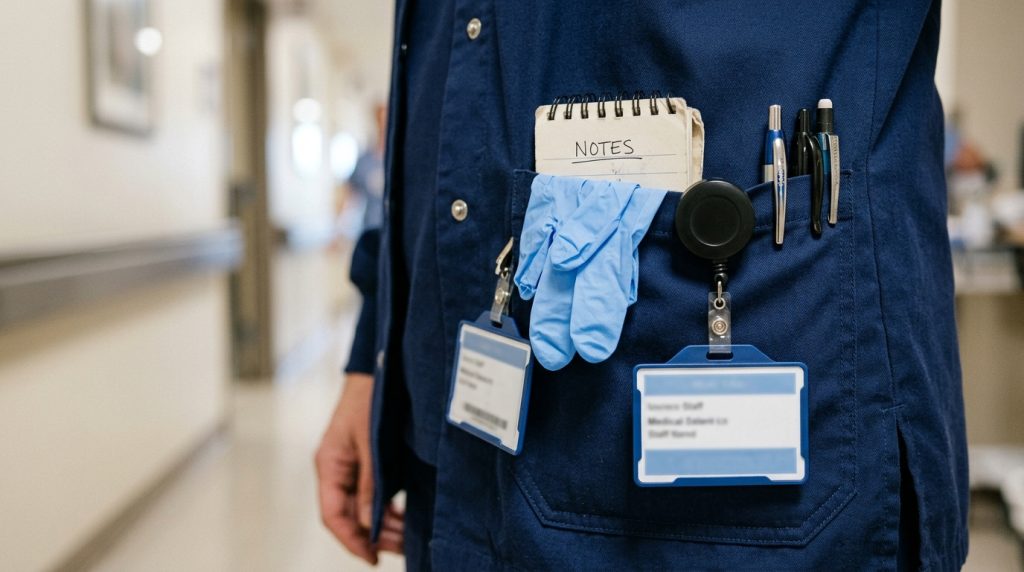
Healthcare workers may carry:
- Pens
- Badge reel
- Phone
- Small notebook
- Gloves
- Alcohol pads
- Tape
- Scissors
- Penlight
- Keys
- Stethoscope accessories
- Small clinical tools
Before buying a scrub jacket, workers should check:
- Front pocket depth
- Interior pocket options
- Zippered pocket security
- Pen slot placement
- Badge loop placement
- Whether pockets sag when filled
- Whether pocket items hit the hip while walking
- Whether pockets interfere with sitting
- Whether jacket pockets remain accessible over scrub tops
Pocket needs vary by role. A nurse may need more utility storage. A medical assistant may want quick access to pens and notes. A dental assistant may need pockets that remain comfortable while seated. A veterinary worker may need secure pockets during active movement.
Scrub Jackets Should Work With Scrub Tops
A scrub jacket should be chosen with scrub tops in mind. A jacket may fit well alone but feel too tight over the actual top worn during a shift.
Healthcare workers should consider:
- Scrub top sleeve length
- Fabric thickness under the jacket
- Whether the top bunches at the shoulders
- Whether pockets remain accessible
- Whether the neckline works with the jacket collar
- Whether the colors coordinate
- Whether embroidery placement remains visible
- Whether the full uniform follows workplace rules
Trying on the jacket with a normal scrub top is more useful than trying it on over casual clothes.
Jackets Can Support Team Uniforms
Scrub jackets are often useful for healthcare teams because they create a coordinated layer over scrub sets. A clinic may choose one jacket color to match department colors or embroidery standards while still allowing staff to choose approved tops and pants.
Team buyers should consider:
- Approved jacket color
- Size range
- Fit options for different body types
- Embroidery placement
- Name and credential requirements
- Reorder availability
- New-hire ordering process
- Whether jacket fabric matches scrub sets
- Whether the jacket works across departments
- Return or exchange expectations
A good team jacket should look consistent while still fitting staff comfortably.
Embroidery Placement Should Be Planned
Scrub jackets are commonly used for embroidery because they provide a visible outer layer. Names, credentials, practice names, or department information may be added depending on workplace policy.
Before embroidery, teams should confirm:
- Correct spelling of names
- Credentials and titles
- Approved logo or text placement
- Thread color
- Jacket size and fit
- Whether the jacket will be worn regularly
- Whether returns are allowed after embroidery
- Whether the fabric supports embroidery cleanly
Embroidery should be planned after fit and color are confirmed. Once a jacket is customized, exchange options may be limited.
Workplace Dress Codes Come First
Before buying scrub jackets, healthcare workers should confirm workplace or school uniform requirements. Dress codes can vary by hospital, clinic, department, dental office, veterinary practice, or training program.
Dress codes may specify:
- Required jacket color
- Whether jackets must match scrubs
- Whether outer layers are allowed
- Whether fleece is permitted
- Whether embroidery is required
- Whether names or credentials must appear
- Whether prints are allowed
- Whether zip-front jackets are approved
- Whether lab coats are required instead
Buying before checking these rules can lead to returns or uniforms that cannot be worn at work.
Infection-Control Policies Should Be Followed
Scrub jackets are part of workplace attire, so employer policies matter. Healthcare settings may have rules about laundering, sleeves, outer layers, personal protective equipment, and where work clothing can be worn.
The CDC explains that Standard Precautions are used for all patient care and include common infection-prevention practices and personal protective equipment use. Scrub jacket use and laundering should always follow employer policy and garment care labels. More context is available through the CDC’s guidance on standard precautions for infection control.
A scrub jacket should be practical, but it should also fit the facility’s expectations for cleanliness, laundering, and appropriate clinical attire.
Warmth Should Not Create Bulk
Warmth is useful, but bulk can become a problem. A bulky jacket may restrict movement, interfere with lab coats, make pockets harder to use, or feel too warm during active tasks.
Healthcare workers should check:
- Whether the jacket feels bulky over scrubs
- Whether sleeves fit comfortably
- Whether the shoulders move well
- Whether pockets stay accessible
- Whether the jacket works while sitting
- Whether it can be removed easily
- Whether it still looks professional
- Whether it feels too warm during active work
The right jacket should add comfort without slowing the worker down.
Who Needs Women’s Scrub Jackets?
Different healthcare roles may need different scrub jacket features. A jacket that works well in one setting may not be ideal in another.
Nurses and CNAs
Nurses and CNAs often need jackets that support movement, pockets, warmth, and long-shift comfort.
Helpful features may include:
- Stretch fabric
- Functional pockets
- Comfortable cuffs
- Breathable warmth
- Easy-care fabric
- Approved colors
Medical assistants
Medical assistants may move between patient intake, vitals, charting, front-office tasks, and room turnover.
Helpful features may include:
- Professional appearance
- Practical pocket layout
- Zip-front convenience
- Comfortable layering
- Embroidery compatibility
- Team-friendly colors
Dental professionals
Dental workers often sit, lean, reach, and work in compact treatment spaces.
Helpful features may include:
- Shoulder flexibility
- Comfortable sleeves
- Smooth fabric
- Pocket access while seated
- Clean team presentation
- Lightweight warmth
Veterinary staff
Veterinary workers may bend, lift, clean, and move quickly during animal care.
Helpful features may include:
- Secure pockets
- Durable fabric
- Stretch recovery
- Easy-care construction
- Comfortable movement
- Practical layering
Healthcare students
Students often need school-approved jackets that are comfortable for labs, simulations, and clinical rotations.
Helpful features may include:
- Required colors
- Correct sizing
- Practical pockets
- Easy washing
- Comfortable movement
- Budget-conscious value
Local Try-On Can Help With Jacket Fit
Scrub jacket sizing can vary by brand, fabric, cut, and layering style. Trying on jackets locally can help healthcare workers avoid buying a jacket that feels too tight over scrub tops or too bulky during movement.
Healthcare workers can review a local medical scrub store profile before planning an in-person fit check.
Local try-on support is useful for:
- First-time scrub buyers
- Workers switching brands
- Healthcare students
- Staff choosing embroidered jackets
- Workers between sizes
- Team uniform buyers
- Shoppers comparing zip and snap styles
- Buyers checking color in person
Team Uniform Planning for Women’s Scrub Jackets
Healthcare teams often need scrub jackets that look consistent while still supporting different body types and daily roles. A clinic may choose one approved jacket color while allowing staff to select approved sizes, scrub tops, scrub pants, and layers.

Team buyers should consider:
- Approved team color
- Size range
- Jacket style options
- Pocket needs by role
- Embroidery requirements
- Department color rules
- Reorder availability
- New-hire ordering process
- Return or exchange expectations
- Whether staff can move comfortably in the jacket
A good team jacket plan should create a coordinated appearance without forcing every staff member into an uncomfortable layer.
Care and Laundering Should Be Reviewed
Scrub jackets are worn often and may be washed frequently. Care instructions should be checked before buying multiple jackets or placing a team order.
Before buying, healthcare workers should check:
- Machine-wash instructions
- Drying instructions
- Fabric content
- Whether ironing is needed
- Whether fabric may shrink
- Whether color may fade
- Whether embroidery needs special care
- Whether fabric attracts lint or hair
- Whether cuffs keep their shape
- Whether zippers or snaps require care
Easy-care jackets are especially useful for workers who keep several scrub sets in weekly rotation.
How to Compare Women’s Scrub Jackets
No scrub jacket is right for every healthcare worker. The best choice depends on role, workplace rules, fabric preference, warmth needs, and layering habits.
Before buying, ask:
- Does the jacket allow shoulder movement?
- Does it fit over normal scrub tops?
- Does the sleeve length feel right?
- Does the closure style work during the shift?
- Are the pockets useful for daily tools?
- Does the fabric feel warm without being bulky?
- Does the jacket meet workplace policy?
- Does the color match approved scrubs?
- Can it support embroidery if needed?
- Will it work for team uniform planning?
The right jacket should work during a full shift, not only during a quick try-on.
Common Mistakes When Buying Women’s Scrub Jackets
Choosing warmth before mobility
A warm jacket still needs to support reaching, sitting, bending, and active clinical movement.
Ignoring sleeve length
Sleeves that are too long, too short, or too tight can become distracting during the shift.
Buying before checking dress code
Some workplaces have rules about jacket color, fabric, embroidery, fleece, and outer layers.
Forgetting to test layering
A jacket should be tried on over the scrub top or underscrub normally worn at work.
Overlooking pocket placement
Jacket pockets should be useful without sagging, bulking, or interfering with sitting.
Embroidering before confirming fit
Customized jackets may be harder to exchange, so size and style should be confirmed first.
Final Checklist Before Buying Women’s Scrub Jackets
Before choosing women’s scrub jackets, healthcare workers should confirm:
- Workplace-approved color
- Correct jacket size
- Shoulder movement
- Sleeve length
- Cuff comfort
- Jacket length
- Fabric warmth
- Breathability
- Closure style
- Pocket layout
- Layering compatibility
- Embroidery requirements
- Care instructions
- Return or exchange policy
- Team uniform needs, if applicable
Women’s scrub jackets should help healthcare workers stay comfortable, organized, and professional during changing workplace temperatures. The best option should fit over scrubs, support movement, follow workplace rules, and remain practical after repeated wear.
FAQs
What should healthcare workers look for in women’s scrub jackets?
Healthcare workers should look for shoulder mobility, comfortable sleeves, useful pockets, easy layering, breathable warmth, workplace-approved colors, and easy-care fabric. The best scrub jacket should fit over scrub tops without pulling, bunching, or restricting movement.
Are scrub jackets good for nurses?
Scrub jackets can be useful for nurses who work in cool units, long shifts, or settings where extra storage and layering are helpful. Nurses should check pocket placement, sleeve length, shoulder movement, workplace rules, and whether the jacket can be worn during clinical tasks.
Should scrub jackets be tight or loose?
A scrub jacket should fit comfortably over scrub tops without feeling tight through the shoulders, chest, arms, or back. It should not be so loose that it looks bulky, interferes with tasks, or makes pockets sag when filled.
Can scrub jackets be embroidered?
Many scrub jackets can be embroidered, but fit, size, color, fabric, and workplace requirements should be confirmed first. Customized jackets may have limited return options, so workers and teams should verify spelling, credentials, placement, and sizing before embroidery.
Should healthcare workers try on scrub jackets before buying?
Trying on is helpful because scrub jackets must fit over scrub tops and support movement. A try-on can confirm sleeve length, shoulder mobility, pocket placement, jacket length, and whether the layer feels comfortable during sitting, reaching, and walking.