









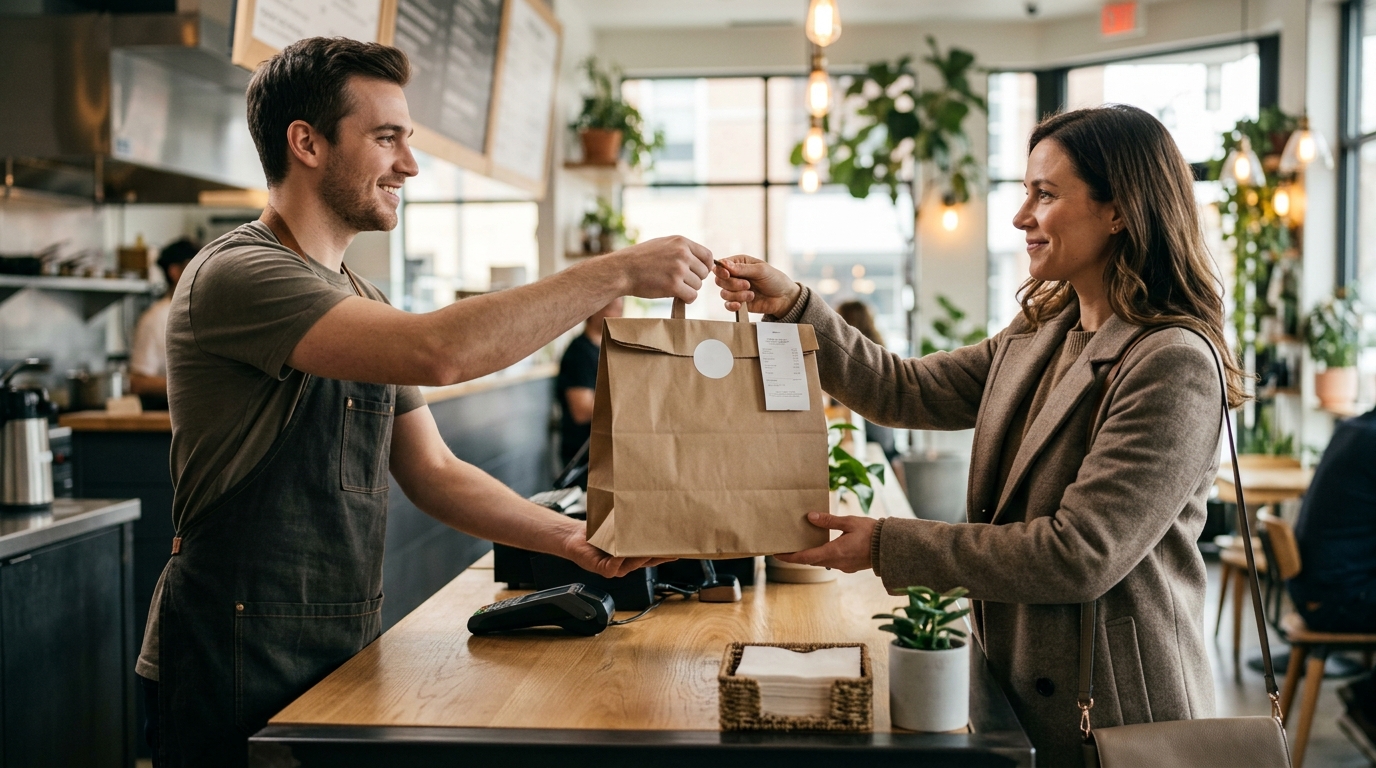
Restaurant takeout gives customers the flexibility to enjoy prepared meals at home, at work, or wherever they prefer to eat. However, a satisfying takeout experience involves more than placing an order and collecting a bag of food. Menu clarity, ordering convenience, preparation quality, packaging, pickup coordination, and order accuracy all influence customer satisfaction.
For restaurants, takeout creates another way to serve customers beyond traditional dine-in service. For customers, it offers a practical alternative when schedules are busy or a restaurant meal is preferred without sitting down at a table. The best experiences combine convenience with the food quality and reliability customers expect from a restaurant.
Understanding these elements helps customers make informed choices and helps restaurants identify the details that make takeout more dependable.
Key Takeaways
- Accurate orders and clear menu information are essential to a positive takeout experience.
- Appropriate packaging helps protect food quality during transportation.
- Convenient ordering and pickup processes reduce unnecessary waiting.
- Preparation timing can influence food temperature, texture, and overall satisfaction.
- Online ordering makes it easier to review menu options and customize selections.
- Clear communication helps customers understand pickup times and order details.
- Reliable takeout depends on the entire process, from placing an order to enjoying the meal.
What Defines a Great Restaurant Takeout Experience?
A great takeout experience combines food quality with a convenient, reliable ordering process. Customers should be able to understand the menu, submit their selections, receive the correct order, and transport their meals without unnecessary difficulty.
Several factors contribute to this experience:
- Order accuracy: The food and modifications match the submitted order.
- Food quality: Meals are prepared properly and remain suitable for transportation.
- Packaging: Containers help prevent leaks, spills, and unnecessary heat loss.
- Convenience: Ordering and pickup require minimal unnecessary effort.
- Communication: Customers receive clear information about order status and collection.
- Consistency: The restaurant delivers a dependable experience across visits.
These elements work together. Even a well-prepared meal can disappoint if the order is incorrect or the packaging fails during the journey home.
Why Order Accuracy Matters for Takeout
Order accuracy is one of the most important parts of restaurant takeout. Customers generally expect to receive the items they selected, including the correct entrees, sides, beverages, and requested modifications.
Errors can create inconvenience, additional waiting, and unnecessary food waste. They may also be particularly frustrating when an order includes several meals for a family or group.
Restaurants can support accuracy through clear digital menus, readable order summaries, organized preparation procedures, and final order checks before handoff.
Customers can also help by reviewing their selections before submitting an order, especially when choosing quantities, substitutions, or special instructions.
How to Reduce Common Ordering Mistakes
Before completing an order, customers should check:
- Item names and quantities.
- Selected sides and beverages.
- Available customization options.
- Special instructions.
- Pickup location and estimated collection time.
A careful review helps identify mistakes before the restaurant begins preparing the meal.
How Packaging Protects Takeout Food Quality
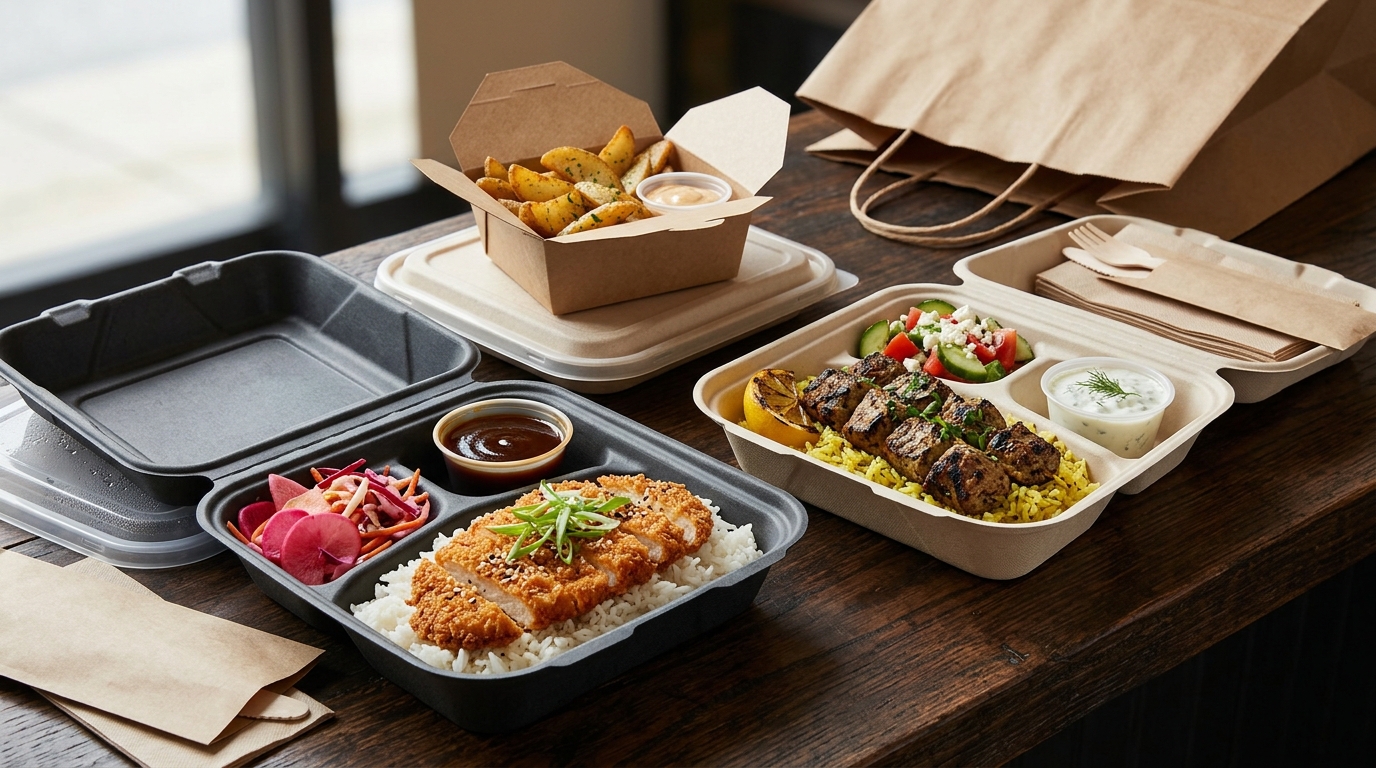
Packaging affects how food travels from the restaurant to the customer. The right container can help preserve temperature, contain sauces, separate different components, and protect the meal from spills.
Different foods have different packaging needs. A saucy entree requires a secure, leak-resistant container, while crispy foods may benefit from packaging that allows some moisture to escape rather than trapping steam.
Restaurants should consider the following packaging characteristics:
| Packaging Feature | Why It Matters |
| Secure closures | Help prevent spills during transportation |
| Suitable container size | Reduces unnecessary movement and damage |
| Heat retention | Helps maintain serving temperature |
| Ventilation where appropriate | Can help preserve the texture of crispy foods |
| Separate compartments | Keep sauces, sides, and other components organized |
Packaging cannot preserve every aspect of freshly served food indefinitely. Travel time and storage conditions also affect temperature, texture, and quality.
Why Convenient Pickup Matters
Pickup is a key part of the takeout experience. Even when ordering is simple, an unclear collection process can create unnecessary delays.
A convenient pickup experience typically includes clear instructions, realistic preparation estimates, an identifiable collection point, and accurate order identification.
Restaurants can improve the process by organizing completed orders, communicating delays, and ensuring that staff can locate the correct order efficiently.
Customers can make pickup easier by confirming the restaurant location, reviewing the estimated collection time, and following any instructions provided during checkout.
For people exploring takeout restaurants near me, pickup convenience is worth considering alongside menu variety and food quality.
How Online Food Ordering Makes Takeout Easier
Online food ordering allows customers to browse menus and submit meal selections through a website or digital ordering platform. Instead of relying entirely on a phone conversation or placing an order in person, customers can review available options at their own pace.
A useful online ordering system should provide:
- Clear menu categories.
- Accurate item descriptions and prices.
- Easy-to-understand customization options.
- A straightforward checkout process.
- Clear confirmation of the submitted order.
- Useful pickup information.
Digital ordering can reduce misunderstandings by displaying selections in writing. However, the system still needs accurate menu information and reliable order processing to deliver the intended benefit.
Why Mobile-Friendly Ordering Matters
Many customers use smartphones to order restaurant meals. A mobile-friendly website should make menu browsing, item selection, and checkout easy on a smaller screen.
Buttons should be easy to use, descriptions should be readable, and the ordering process should not require unnecessary steps.
A confusing mobile experience can cause customers to abandon their orders or submit incorrect selections.

How Preparation Timing Affects Takeout Quality
Food quality can change while a meal waits for pickup or travels to its destination. Temperature, moisture, and texture are particularly important for meals that are best served immediately.
Restaurants need to coordinate preparation and collection so that completed orders do not sit unnecessarily before pickup.
Customers can also improve the experience by collecting meals close to the estimated pickup time and avoiding unnecessary delays before eating.
Different foods respond differently to transportation. For example, fried foods may lose crispness as moisture builds up, while soups and sauced dishes require containers that retain liquid securely.
The goal is not to make every takeout meal identical to restaurant dining. It is to preserve as much of the intended food quality as reasonably possible.
Why Clear Menu Information Improves the Experience
Customers need accurate information to make confident ordering decisions. Menu descriptions should explain what an item includes and distinguish between available sizes, combinations, and modifications.
Useful menu details may include:
- Main ingredients.
- Included side dishes.
- Portion or serving options.
- Available substitutions.
- Prices and additional charges.
- Relevant dietary or allergen information.
Clear descriptions reduce uncertainty and help customers choose meals that match their preferences.
When allergen information is important, customers should confirm details directly with the restaurant because ingredients and preparation practices can vary.
How Takeout Supports Family Meals
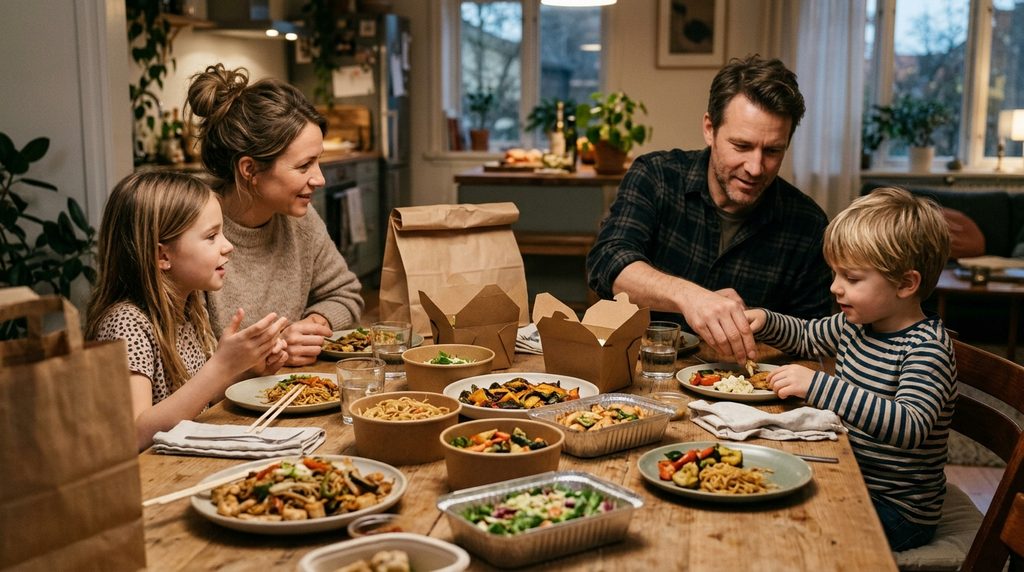
Takeout can simplify family meals when cooking is impractical or everyone wants something different. A restaurant order allows family members to choose from the available menu while avoiding the need to prepare several dishes at home.
Families may use takeout for:
- Busy weekday dinners.
- Weekend meals.
- Family movie nights.
- Casual gatherings.
- Celebrations at home.
Larger orders require extra attention to quantities, sides, beverages, and packaging. Reviewing the full order before checkout can help ensure that everyone has what they need.
What Customers Should Consider Before Ordering Takeout
Choosing a restaurant for takeout involves more than selecting an appealing dish. Customers should consider whether the meal suits their travel time, whether the pickup process is convenient, and whether the restaurant provides enough information to place an accurate order.
| Consideration | What to Check |
| Menu selection | Are the preferred dishes available? |
| Order process | Is the website or ordering system easy to use? |
| Preparation time | Does the estimated timing fit the schedule? |
| Pickup | Is the collection location clear and convenient? |
| Packaging | Are meals likely to travel securely? |
| Dietary needs | Can the restaurant confirm relevant ingredients and preparation details? |
| Total cost | Are item prices and additional charges clear? |
Taking a moment to review these details can help customers avoid common takeout frustrations.
How Restaurants Can Build Customer Confidence
A dependable takeout process encourages customers to feel confident placing future orders. That confidence develops when the restaurant communicates clearly, prepares meals consistently, and resolves problems professionally.
Restaurants can strengthen the experience by maintaining accurate menus, training staff on order verification, using suitable packaging, and providing realistic pickup estimates.
When delays or errors occur, timely communication helps customers understand the situation and what to expect next.
Consistency matters because customers evaluate the complete experience, not just the food. Reliable ordering and collection can be just as important as an appealing menu.
How to Choose Between Pickup and Delivery
Pickup and delivery both offer convenience, but the right option depends on the customer’s circumstances.
| Factor | Restaurant Pickup | Delivery |
| Collection | Customer travels to the restaurant | Meal is brought to the specified destination |
| Timing | Depends on preparation and travel to the restaurant | Depends on preparation and delivery arrangements |
| Convenience | Useful when the restaurant is easy to reach | Useful when travel is difficult or impractical |
| Food transportation | Customer manages the journey after collection | Delivery arrangements determine the journey |
| Additional costs | Depend on the restaurant’s pricing | May include delivery or service fees |
Neither option guarantees better food quality in every situation. Travel time, packaging, restaurant procedures, and the type of meal all influence the final result.
Frequently Asked Questions
What makes a restaurant takeout experience good?
A good takeout experience combines accurate orders, quality food preparation, suitable packaging, convenient pickup, and clear communication. Customers should be able to order confidently, collect the correct meal, and transport it without unnecessary spills or delays.
How can customers avoid mistakes when ordering takeout?
Customers can review item names, quantities, sides, customizations, and pickup details before submitting an order. Checking the confirmation afterward can also help identify potential errors early enough to contact the restaurant.
Why is packaging important for restaurant takeout?
Packaging helps protect food during transportation by containing liquids, separating meal components, and supporting temperature retention. The appropriate container also depends on the dish, since crispy foods and sauced meals have different packaging requirements.
Is online food ordering better than ordering by phone?
Online ordering can make it easier to review menu details and confirm selections in writing. Phone ordering may still be useful for questions or special requests. The better option depends on the ordering system and the customer’s needs.
How can restaurants keep takeout food in better condition?
Restaurants can coordinate preparation with pickup, use packaging suited to each dish, and provide clear collection information. Customers can help by collecting orders promptly and following appropriate food-storage guidance after bringing meals home.
Conclusion
A great restaurant takeout experience depends on the details that connect ordering, preparation, packaging, and pickup. Accurate orders, clear menus, appropriate containers, and convenient collection all help customers enjoy restaurant meals outside the dining room.
Online ordering can make the process easier, but technology alone is not enough. Restaurants also need dependable preparation procedures and clear communication, while customers benefit from reviewing their selections and collecting meals at the expected time.
When these elements work together, takeout becomes a practical and reliable way to enjoy restaurant food at home, at work, or during a busy day.