










A pre-existing condition does not automatically prevent someone from bringing a New York personal injury claim. The key question is whether the accident caused a new injury, aggravated an old condition, worsened prior symptoms, or created new limitations that can be supported with medical evidence. People reviewing these issues may use a personal injury lawyer Long Island resource to understand how causation, damages, insurance disputes, and medical proof are generally evaluated.
Quick Answer
A pre-existing condition can affect a New York personal injury claim, but it does not automatically defeat the claim. An injured person may still recover damages when an accident aggravates or worsens a prior condition, creates new pain, increases disability, or causes a separate injury. The claim usually depends on medical records, imaging, treatment history, doctor opinions, symptom timelines, prior records, and evidence showing what changed after the accident.
Key Takeaways
- A pre-existing condition does not automatically bar a personal injury claim.
- New York courts recognize that a person may recover for increased disability or pain when an accident aggravates a pre-existing injury or condition.
- The injured person generally needs proof connecting the accident to a new injury, worsening symptoms, or aggravation of the prior condition.
- In motor vehicle claims, serious injury issues may require objective medical evidence, especially when the defense argues symptoms are from degeneration or prior conditions.
- Prior medical records can help the claim when they show the person’s condition before the accident and how symptoms changed afterward.
- Insurance companies often use pre-existing conditions to dispute causation, damages, treatment necessity, and settlement value.
- Honest disclosure is important. Hiding prior injuries or treatment can damage credibility and make the claim harder to prove.
What Is a Pre-Existing Condition?
A pre-existing condition is a medical issue, injury, illness, diagnosis, pain complaint, degenerative finding, or physical limitation that existed before the accident. It may be serious, mild, symptomatic, dormant, treated, untreated, documented, or unknown until later imaging reveals it.
Pre-existing conditions may include:
- Prior back pain
- Neck injuries
- Herniated discs
- Degenerative disc disease
- Arthritis
- Knee injuries
- Shoulder injuries
- Hip problems
- Prior fractures
- Nerve pain
- Headaches
- Concussion history
- Anxiety or depression
- Diabetes-related complications
- Balance issues
- Prior surgery
- Old workplace injuries
- Sports injuries
- Age-related changes
A pre-existing condition can become important when the injured person claims the accident caused pain, limitations, treatment needs, lost income, or permanent impairment in the same body area.
Does a Pre-Existing Condition Prevent an Injury Claim?
No. A pre-existing condition does not automatically prevent a New York personal injury claim. The law does not require an injured person to be in perfect health before an accident. The issue is whether the accident caused a new injury or made an existing condition worse.
A claim may still be valid when the accident:
- Aggravated an old injury
- Worsened prior symptoms
- Made a dormant condition painful
- Increased physical limitations
- Required new medical treatment
- Caused a flare-up that did not previously exist
- Changed the person’s ability to work
- Created new pain in the same body area
- Turned a manageable condition into a disabling condition
New York case law recognizes aggravation of a pre-existing condition as a damages issue when the accident caused increased disability or pain.
New Injury vs. Aggravation of an Old Condition
A personal injury claim may involve a completely new injury, an aggravation of a prior condition, or both. These are different concepts, and medical proof should explain the difference.
A new injury may involve:
- A new fracture
- A new ligament tear
- A new surgical injury
- A new concussion
- A new burn
- A new wound
- A new disc herniation
- A new nerve injury
An aggravation may involve:
- Increased pain in a prior injury area
- Worsened range of motion
- Increased numbness or tingling
- A dormant condition becoming symptomatic
- A prior mild condition becoming disabling
- Increased need for treatment
- A prior condition requiring surgery after the accident
- Loss of ability to perform activities that were possible before
A claim may be stronger when medical records clearly explain what existed before the accident and what changed afterward.
Why Causation Becomes the Main Issue
Causation means showing that the accident caused the injury, worsened the condition, or created new symptoms. When there is no pre-existing condition, causation may still be disputed. When there is a prior condition, insurers may argue that the accident did not cause anything new.
Causation questions may include:
- Was the same body part treated before the accident?
- Were symptoms active or inactive before the accident?
- Did pain increase after the accident?
- Did the injured person need new treatment?
- Did imaging show new findings?
- Did imaging show only degeneration?
- Did the person miss work after the accident?
- Did doctors connect the symptoms to the accident?
- Did the accident change the person’s daily limitations?
- Did the accident accelerate the need for surgery?
A broader guide to evidence for personal injury claims can help explain why records, timelines, medical opinions, photos, and witness details often matter when causation is disputed.
Why Prior Medical Records Can Help
Some injured people worry that prior medical records will automatically hurt the claim. In many cases, prior records can help because they show what the person’s baseline condition was before the accident.
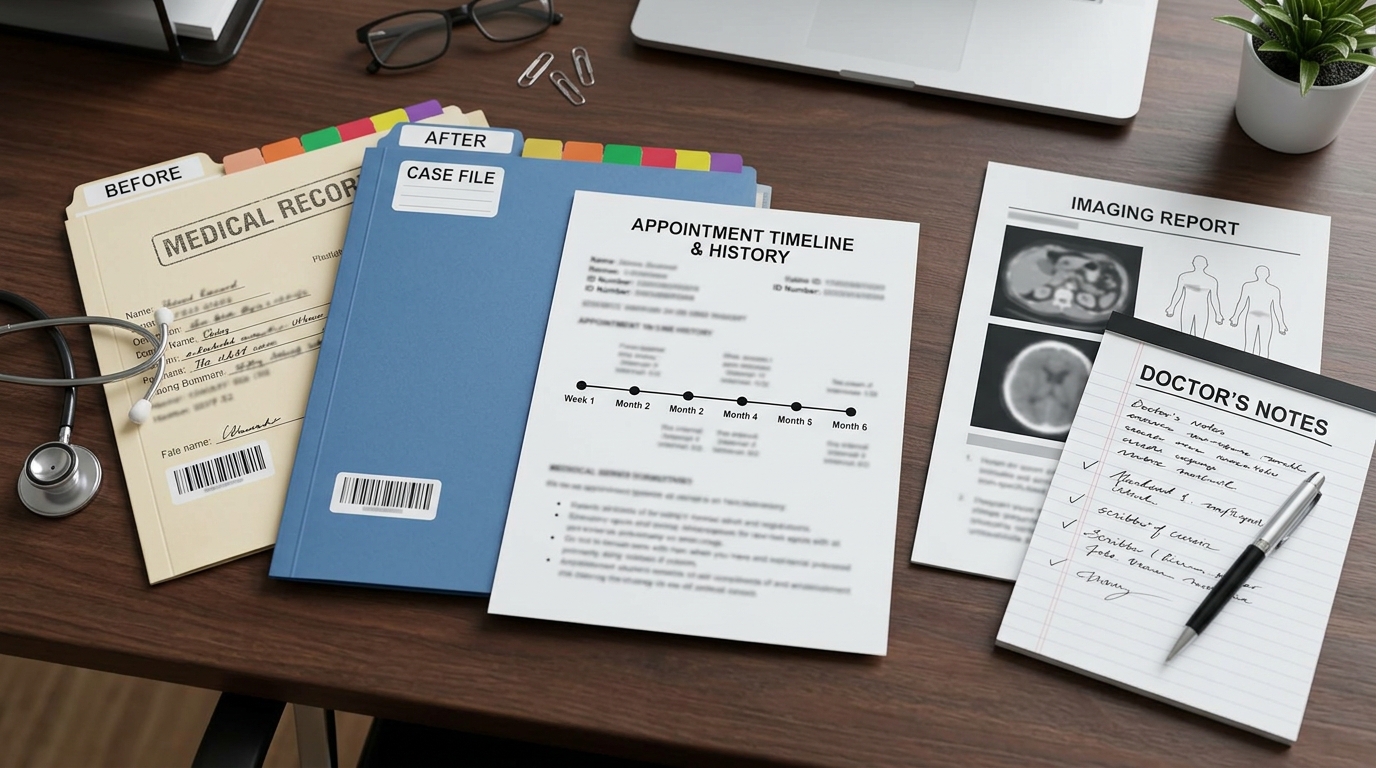
Prior records may help show:
- Symptoms were mild before the accident
- The person had recovered from an earlier injury
- The person was not treating regularly before the accident
- The person had no work restrictions before the accident
- The accident caused new pain or new limitations
- Imaging findings became worse after the accident
- Treatment needs increased after the accident
- The person’s quality of life changed after the accident
The comparison between before and after can be one of the most important parts of the claim.
Why Hiding Prior Conditions Can Hurt the Claim
Hiding prior injuries, treatment, pain, surgery, or imaging can damage credibility. Insurance companies and defense attorneys often obtain medical records, pharmacy records, prior claim records, workers’ compensation records, and deposition testimony.
Problems can arise when a person:
- Denies prior pain that appears in records
- Fails to disclose prior surgery
- Leaves out prior imaging
- Claims no prior treatment when records show otherwise
- Gives inconsistent statements about symptoms
- Does not explain how symptoms changed
- Tries to minimize a prior condition instead of addressing it clearly
Honest disclosure does not mean the claim is weak. It allows the medical evidence to focus on what the accident changed.
Common Pre-Existing Conditions Raised by Insurance Companies
Insurance companies often focus on conditions that can be blamed on aging, degeneration, prior trauma, or chronic illness. These arguments are common in back, neck, shoulder, knee, hip, and head injury claims.
Commonly disputed conditions include:
- Degenerative disc disease
- Spinal stenosis
- Arthritis
- Osteoarthritis
- Prior herniated discs
- Prior bulging discs
- Old fractures
- Prior knee tears
- Prior rotator cuff tears
- Chronic headaches
- Prior concussions
- Anxiety or depression
- Chronic pain conditions
- Prior surgeries
- Old workplace injuries
A pre-existing diagnosis does not answer the whole question. The claim still depends on whether the accident worsened the condition, changed symptoms, or created new limitations.
Degenerative Findings on Imaging
MRI, CT, and X-ray reports may show degenerative findings. These findings are common, especially as people age. Insurance companies may argue that degeneration, not the accident, caused the pain.
Degenerative findings may include:
- Disc desiccation
- Degenerative disc disease
- Facet arthropathy
- Spinal stenosis
- Osteoarthritis
- Bone spurs
- Spondylosis
- Prior healed fracture changes
- Chronic tendon changes
- Meniscal degeneration
The important question is not only whether degeneration exists. The question is whether the accident caused a new injury, worsened symptoms, aggravated the condition, or made previously manageable findings painful and limiting.
Objective Medical Evidence
Objective medical evidence can be especially important when pre-existing conditions are involved. Objective evidence may help separate prior conditions from accident-related changes.
Objective evidence may include:
- MRI reports
- CT scans
- X-rays
- EMG or nerve testing
- Range-of-motion measurements
- Surgical findings
- Specialist reports
- Therapy progress notes
- Functional capacity evaluations
- Diagnostic injection response
- Before-and-after imaging comparisons
- Doctor opinions on causation
New York motor vehicle injury cases often involve serious injury disputes, and courts may look closely at objective medical evidence when defendants argue that symptoms are due to pre-existing conditions rather than the accident.
Doctor Opinions and Medical Causation
Doctor opinions can be critical in claims involving pre-existing conditions. A treating doctor, specialist, surgeon, or medical expert may explain whether the accident caused a new injury, worsened a condition, or accelerated treatment needs.
A medical opinion may address:
- Diagnosis
- Accident mechanism
- Symptom onset
- Prior medical history
- Imaging findings
- New versus old findings
- Treatment necessity
- Permanency
- Work restrictions
- Future care
- Whether the accident aggravated the condition
- Whether the accident accelerated symptoms or surgery
A clear opinion can help respond to defense arguments that the injury was unrelated to the accident.
Symptom Timeline Matters
A symptom timeline helps show what changed after the accident. This can be especially useful when the person had prior pain but was functioning normally before the incident.
A useful timeline may show:
- Symptoms before the accident
- Date and time of the accident
- Symptoms immediately after the accident
- First medical visit
- New complaints
- Worsening symptoms
- Imaging dates
- Specialist referrals
- Therapy progress
- Work restrictions
- Surgery recommendations
- Long-term limitations
The timeline should be consistent with medical records, work records, insurance letters, and the injured person’s statements.
Treatment Gaps and Prior Conditions
Treatment gaps can become important. An insurance company may argue that a gap means the injury was not serious or not caused by the accident. However, gaps can have reasonable explanations.
Treatment gaps may be explained by:
- Delayed symptom development
- Lack of health insurance
- Waiting for referrals
- No-fault disputes
- Work or caregiving obligations
- Transportation problems
- Provider scheduling delays
- Temporary improvement followed by worsening
- Financial concerns
- Difficulty getting specialist appointments
The reason for any gap should be documented when possible. Unexplained gaps can make pre-existing condition disputes harder.
Pre-Existing Conditions in Car Accident Claims
Car accident claims in New York may involve no-fault benefits, bodily injury claims, serious injury issues, prior medical records, imaging, and causation disputes. Pre-existing spinal findings are common in these cases.
A car accident attorney resource may help readers understand why no-fault paperwork, medical records, serious injury evidence, and bodily injury damages often need to be reviewed together.
In car accident claims, pre-existing condition disputes may involve:
- Neck injuries
- Back injuries
- Shoulder injuries
- Knee injuries
- Headaches
- Concussion symptoms
- Degenerative disc disease
- Prior crashes
- Prior workers’ compensation injuries
- Prior pain management treatment
- Prior imaging findings
Insurance Law § 5102 defines serious injury categories in New York motor vehicle claims.
Pre-Existing Conditions in Slip, Trip, and Premises Liability Claims
Slip, trip, and premises liability claims may involve prior joint problems, arthritis, balance issues, old fractures, or previous spine conditions. Property owners and insurers may argue that the injury was not caused by the fall.
A premises liability attorney resource may help explain why property control, notice evidence, medical proof, and injury documentation often matter in unsafe-property claims.
Relevant evidence may include:
- Photos of the hazard
- Incident report
- Witness statements
- Medical records before and after the fall
- Imaging comparison
- Mobility records
- Therapy notes
- Work restrictions
- Daily limitation evidence
- Doctor causation opinions
A fall can still aggravate a prior condition if the evidence supports that the accident worsened symptoms or limitations.
Pre-Existing Conditions in Construction and Workplace Claims
Construction and workplace accident claims may involve workers with prior back pain, joint problems, old work injuries, or degenerative findings. These claims can become complex when workers’ compensation, third-party liability, and medical causation overlap.
A construction accident attorney resource may help readers understand why jobsite evidence, safety records, medical records, wage loss, and prior injury history may all affect claim evaluation.
Important evidence may include:
- Incident report
- Workers’ compensation records
- Jobsite photos
- Safety records
- Supervisor reports
- Prior work restrictions
- Medical records
- Imaging reports
- Wage loss records
- Doctor opinions
- Functional limitations after the accident
Work history can help show whether the person was able to perform regular job duties before the accident.
Pre-Existing Conditions in Nursing Home Injury Claims
Pre-existing conditions are common in nursing home negligence claims because residents may already have mobility limits, chronic illness, dementia, frailty, pressure injury risk, fall risk, or medication needs. These conditions do not automatically excuse poor care.
A nursing home negligence lawyer Long Island resource may help readers understand why resident records, care plans, fall-risk assessments, wound records, and medical documentation may be important.
Relevant evidence may include:
- Care plans
- Fall risk assessments
- Skin integrity records
- Medication records
- Nutrition records
- Hospital transfer records
- Incident reports
- Family observations
- Photos of injuries
- Facility communication records
- Prior condition records
- New injury documentation
The question is often whether the facility failed to account for known risks or whether poor care caused additional harm.
Pre-Existing Mental Health Conditions
Pre-existing mental health conditions may also become part of a personal injury claim. An accident can worsen anxiety, depression, PTSD symptoms, sleep problems, or emotional distress.
Mental health causation may involve:
- Prior diagnosis
- Prior treatment history
- Medication history
- Symptom stability before the accident
- New symptoms after the accident
- Worsening sleep problems
- Fear related to the accident
- Functional changes
- Therapy records
- Medical opinions
New York courts have recognized that tortious conduct may aggravate pre-existing physical or psychological conditions, but damages must be tied to the harm caused by the defendant’s conduct.
The “Eggshell Plaintiff” Concept
A common principle in injury law is that a wrongdoer may have to take the injured person as they are. In practical terms, a person who is more vulnerable because of age, prior injury, or medical condition is not automatically denied recovery because another person may have suffered less harm from the same accident.
This does not mean every symptom is automatically recoverable. The injured person still needs evidence showing the accident caused new harm, worsened the condition, or increased pain or disability.
The strongest claim usually explains:
- What condition existed before
- How the person functioned before the accident
- What changed after the accident
- What treatment became necessary
- What limitations became worse
- What doctors say about causation
Aggravation Must Be Proven
Aggravation of a pre-existing condition is usually something that must be supported by proof. Courts have discussed the need to plead and prove aggravation where it is being claimed.
Proof may include:
- Before-and-after medical records
- Doctor opinions
- Imaging comparison
- Treatment notes
- Pain progression
- Work restriction records
- Therapy notes
- Surgical findings
- Daily activity limitations
- Testimony from the injured person
- Family or coworker observations
The claim should clearly identify whether the accident caused a new injury, aggravated an old injury, or both.
Apportionment of Damages
Apportionment means separating damages caused by the accident from symptoms or limitations that already existed. This can become important when only part of the injured person’s condition is accident-related.
Apportionment issues may involve:
- Prior pain versus new pain
- Old imaging findings versus new findings
- Prior work restrictions versus new restrictions
- Baseline disability versus increased disability
- Prior treatment needs versus new treatment needs
- Existing degeneration versus traumatic aggravation
- Prior emotional distress versus accident-related worsening
The goal is not always to prove the accident caused every medical problem. The goal may be to prove what harm the accident added.
Comparative Fault Is Different From a Pre-Existing Condition
A pre-existing condition is not the same as comparative fault. A person is not at fault simply because they had arthritis, prior surgery, degeneration, chronic pain, or an old injury before the accident.
Comparative fault focuses on conduct, such as whether someone acted carelessly. A pre-existing condition focuses on medical history and causation.
New York CPLR § 1411 states that culpable conduct attributable to the claimant does not bar recovery, but damages may be reduced in proportion to the claimant’s share of fault.
Pre-existing condition disputes usually ask: What harm did the accident cause?
Comparative fault disputes usually ask: Did the injured person help cause the accident?
Medical Authorization Requests
Insurance companies may request medical authorizations to investigate prior conditions. Some requests may be reasonable and limited to relevant body parts, dates, or providers. Others may be broad.
Authorization issues may involve:
- How many years of records are requested
- Whether unrelated conditions are included
- Whether mental health records are requested
- Whether pharmacy records are requested
- Whether records from unrelated body parts are requested
- Whether the request is tied to a specific defense
- Whether the release allows broad disclosure
Medical records are important, but overly broad requests should be reviewed carefully.
Recorded Statements and Prior Conditions
Insurance adjusters may ask about prior injuries during a recorded statement. The questions may sound simple, but the answers can affect causation arguments later.
Common questions may include:
- Have you ever injured this body part before?
- Did you have pain before the accident?
- Did you ever treat with a chiropractor?
- Did you have prior imaging?
- Did you ever file a workers’ compensation claim?
- Were you taking pain medication before the accident?
- Did you have surgery before?
- Were you under work restrictions before the accident?
The safest answers are accurate, specific, and not speculative. It is better to say that records need to be checked than to guess.
How Insurance Companies Use Pre-Existing Conditions
Insurance companies may use pre-existing conditions to reduce, delay, or deny payment. These arguments are common and should be expected.
Common insurer arguments may include:
- The accident did not cause the injury.
- The symptoms were already present.
- Imaging shows degeneration, not trauma.
- Treatment was for an old condition.
- Surgery would have been needed anyway.
- The person had similar complaints before.
- There was a gap in treatment.
- The person exaggerated what changed.
- The current limitations are unrelated to the accident.
These arguments can often be addressed with medical records, doctor opinions, imaging comparison, and a clear symptom timeline.
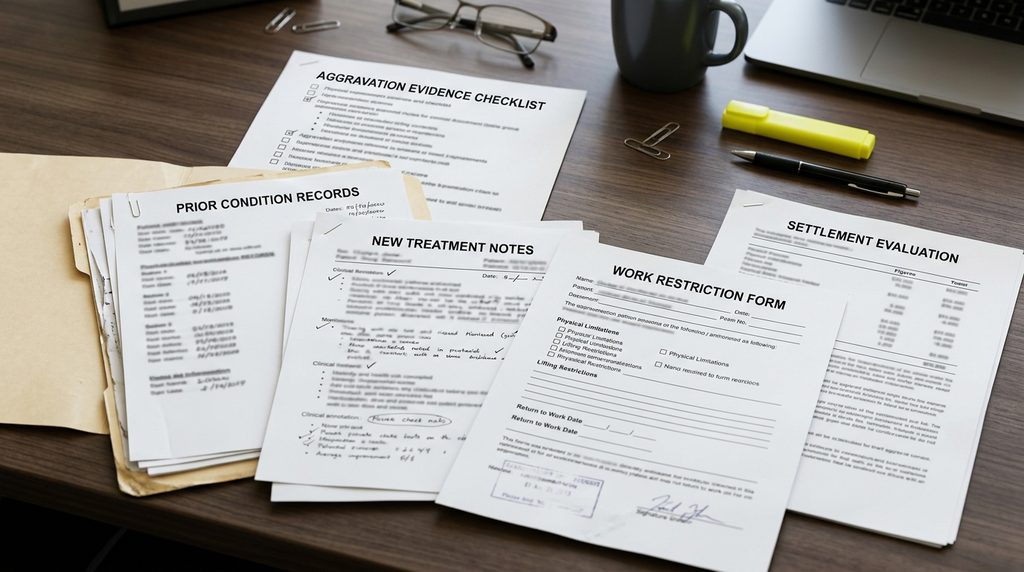
Practical Pre-Existing Condition Review Chart
| Issue to Review | Why It Matters | Useful Evidence |
| Prior symptoms | Shows baseline before the accident | Prior medical records, work history, activity level |
| New symptoms | Helps show what changed after the accident | Emergency records, treatment notes, pain timeline |
| Imaging findings | May show trauma, degeneration, or both | MRI, CT, X-ray, surgical findings |
| Treatment history | Shows whether care increased after the accident | Provider records, therapy notes, referrals |
| Work limitations | Helps show practical impact | Work restrictions, wage records, employer letters |
| Doctor opinions | Supports causation and aggravation | Specialist reports, treating provider notes |
| Daily life changes | Shows non-economic impact | Activity notes, family observations, testimony |
| Prior claims | May be used by insurers | Workers’ comp records, prior settlement records |
Common Mistakes With Pre-Existing Conditions
Some mistakes can make a valid claim harder to prove.
Common mistakes include:
- Hiding prior injuries
- Guessing about medical history
- Not getting prior records
- Ignoring old imaging
- Failing to explain baseline function
- Not documenting what changed after the accident
- Missing medical appointments
- Not reporting worsening symptoms
- Giving inconsistent statements
- Signing broad medical authorizations without review
- Settling before causation is clear
- Assuming degeneration means there is no claim
- Assuming prior pain means the accident did not matter
A strong claim should address prior conditions directly rather than avoid them.
How to Document Aggravation of a Pre-Existing Condition
Documentation should focus on the before-and-after comparison. The goal is to show how the accident changed symptoms, treatment needs, function, and daily life.
Helpful documentation may include:
- Prior medical records
- Prior imaging
- New medical records
- Updated imaging
- Specialist opinions
- Therapy notes
- Surgery recommendations
- Work restrictions
- Wage loss documents
- Pain journal
- Daily limitation notes
- Family observations
- Photos of visible injuries
- Insurance letters
- Prior claim documents, if relevant
The more clearly the records show a change after the accident, the easier it may be to explain aggravation.
Deadlines Still Matter
Pre-existing condition disputes can take time, but legal deadlines still apply. New York Courts lists three years for many negligence-based personal injury claims, car accident claims, and slip and fall claims. Wrongful death, public entity claims, no-fault insurance, and other matters may involve different or shorter deadlines.
Timing issues may involve:
- No-fault notice
- Medical bill submission
- Lost wage proof
- Public entity notice of claim
- Workers’ compensation filing
- Insurance policy notice
- Court filing deadlines
- Discovery deadlines
- Expert disclosure dates
Waiting too long can make prior records harder to collect and medical causation harder to prove.
When Legal Guidance May Be Useful
Legal guidance may be useful when the insurer blames symptoms on degeneration, prior injuries, old imaging, chronic illness, age-related changes, prior surgery, mental health history, or earlier workers’ compensation claims. It may also be useful when the person had prior pain but became significantly worse after the accident.
A pre-existing condition review may require prior records, updated medical records, imaging, doctor opinions, work history, activity history, insurance correspondence, recorded statement review, and settlement analysis.
People researching local support may review a Long Island injury law office when looking for personal injury claim information.
FAQs About Pre-Existing Conditions in New York Injury Claims
Can someone bring a personal injury claim with a pre-existing condition?
Yes. A pre-existing condition does not automatically bar a claim. The injured person may still have a claim if the accident caused a new injury, aggravated the old condition, worsened symptoms, or increased disability.
What does aggravation of a pre-existing condition mean?
Aggravation means an accident made an existing condition worse. This may include increased pain, new limitations, more medical treatment, surgery, work restrictions, or reduced ability to perform normal activities.
Will prior medical records hurt an injury claim?
Not always. Prior records may help by showing the person’s baseline before the accident. They can show whether symptoms were mild, stable, inactive, or less limiting before the accident changed the condition.
What if an MRI shows degeneration?
Degeneration does not automatically defeat a claim. The key question is whether the accident caused a new injury, aggravated the degenerative condition, made it symptomatic, or increased pain and limitations.
Why do insurance companies focus on pre-existing conditions?
Insurers often use pre-existing conditions to dispute causation, treatment necessity, damages, and settlement value. These arguments can be addressed with medical records, imaging comparison, doctor opinions, and a clear symptom timeline.
Final Thoughts
Pre-existing conditions can make a New York personal injury claim more complicated, but they do not automatically prevent recovery. The strongest claims usually show what existed before the accident, what changed afterward, how treatment needs increased, and how the accident caused new pain, greater disability, or aggravated symptoms. Honest disclosure, organized records, medical opinions, and a clear before-and-after timeline are often the most important tools for addressing pre-existing condition disputes.