









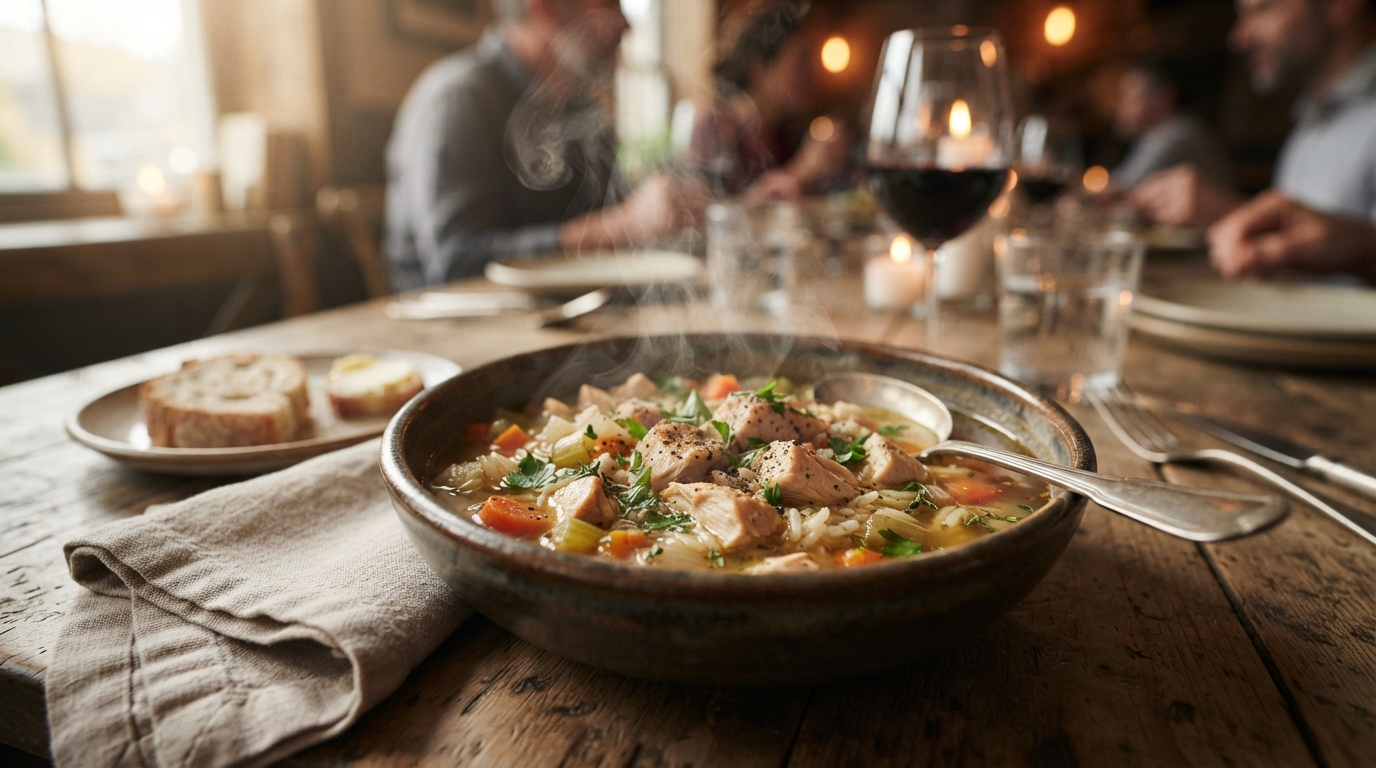
Homemade soup remains a popular comfort food because it combines familiar flavors, satisfying ingredients, and the warmth associated with home cooking. From chicken and rice soup to hearty vegetable and pasta-based recipes, soup can work as an appetizer, side, or complete meal.
For many diners, soup is also connected to family traditions and familiar recipes. A carefully prepared bowl can provide the kind of comforting experience people associate with meals shared around the table.
Restaurant-made soup can bring those qualities to the dining experience while offering the consistency and convenience of professional preparation.
Key Takeaways
- Homemade-style soup combines familiar flavors with satisfying ingredients.
- Soup can serve different purposes, from a light starter to a complete meal.
- Chicken and rice soup is a classic example of a comforting, filling soup.
- Traditional soup recipes can become memorable parts of family dining experiences.
- Restaurant-prepared soup provides the familiarity of homemade cooking with added convenience.
- Soup works well for everyday meals, family dinners, and casual restaurant visits.
What Makes Soup a Comfort Food?
Comfort food is often associated with familiarity, warmth, satisfying textures, and positive memories. Soup naturally fits many of these characteristics because it is typically served warm and can combine several ingredients in a single dish.
Soup can provide:
- Warmth
- Familiar flavors
- Satisfying portions
- Flexible ingredients
- Different textures
- Easy meal combinations
The emotional connection can be just as important as the ingredients. A particular soup may remind someone of family meals, colder days, childhood recipes, or gatherings around the dinner table.
Why Homemade-Style Soup Feels Different
The phrase “homemade” often suggests food prepared with care using familiar cooking methods rather than highly standardized preparation.
Homemade-style soup may emphasize:
Familiar Ingredients
Many traditional soups use ingredients that diners recognize immediately, such as:
- Chicken
- Rice
- Vegetables
- Pasta
- Herbs
- Broth
These familiar ingredients can create flavors that feel approachable and satisfying.
Slow-Developed Flavor
Soup allows ingredients to combine during cooking, creating layers of flavor and texture.
Depending on the recipe, this may involve:
- Broth or stock
- Seasoned proteins
- Vegetables
- Grains
- Pasta
- Herbs and spices
A Familiar Dining Experience
Homemade-style food often creates a connection to meals prepared in family kitchens. That association can make soup particularly appealing when diners want something comforting rather than complicated.
Why Chicken and Rice Soup Remains a Classic
Chicken and rice soup is a particularly recognizable example of comfort food. The combination brings together tender chicken, rice, broth, and vegetables in a warm and satisfying bowl.
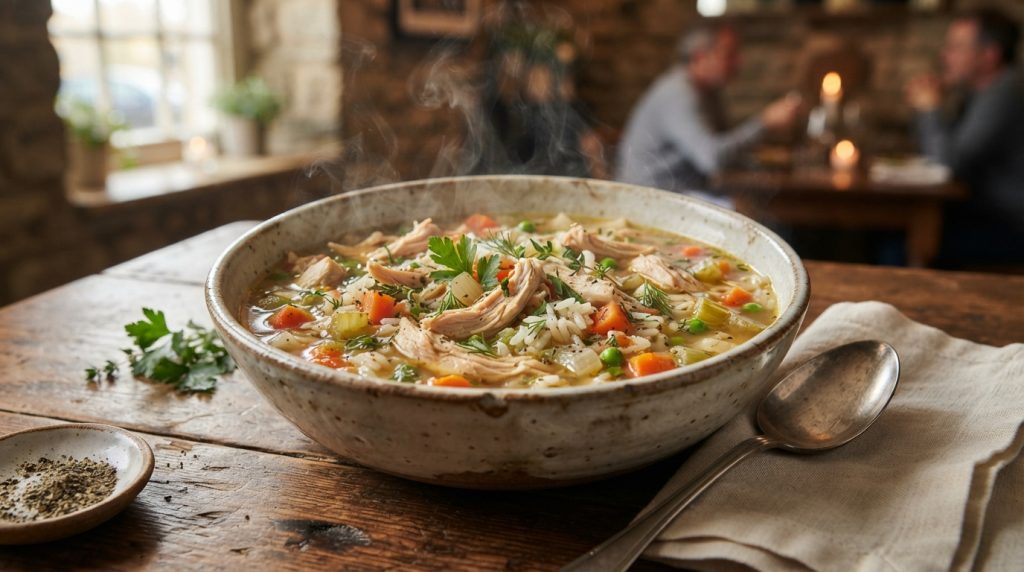
A chicken and rice soup can work as:
- A light lunch
- A dinner starter
- A side dish
- Part of a larger family meal
The combination is familiar enough to appeal to many diners while still providing a substantial eating experience.
For diners specifically looking for a chicken rice soup, a traditional preparation can provide a comforting alternative to heavier entrees.
How Ingredients Influence the Character of Soup
The ingredients used in soup determine its flavor, texture, appearance, and nutritional profile.
Protein
Chicken, beef, seafood, beans, and other proteins can make soup more filling while contributing different flavors and textures.
Vegetables
Vegetables can add:
- Flavor
- Color
- Texture
- Nutrients
Common choices include carrots, celery, onions, tomatoes, and leafy vegetables.
Grains and Starches
Rice, pasta, potatoes, and other starches can make soup more substantial.
Broth and Seasoning
The base of the soup provides much of its character. Herbs, spices, and other seasonings can further develop the flavor.
How Soup Fits Into Different Types of Meals
One reason soup remains popular is its flexibility.
As an Appetizer
A smaller serving can begin a meal without being too filling.
As a Side
Soup can complement sandwiches, salads, or other entrees.
As a Main Course
A hearty soup containing protein, vegetables, and grains can serve as a complete meal for diners who prefer something lighter than a large entree.
This flexibility makes soup suitable for different dining occasions.
Why Soup Works Well for Family Dining
Family dining often involves people with different appetites and preferences. Soup can be an easy addition to a shared meal because it can be ordered in different quantities and paired with many types of entrees.
Families may choose soup:
- As a starter before dinner
- Alongside sandwiches or salads
- As a lighter meal
- As part of a larger family dinner
A broad menu can make this flexibility even more useful by allowing each person to build a meal according to their preferences.
The Connection Between Soup and Family Traditions
Food traditions often develop through repetition. A particular soup may become associated with specific seasons, holidays, family members, or regular meals.
Traditional soup recipes can be connected to:
- Family gatherings
- Holiday meals
- Cold-weather dinners
- Childhood memories
- Sunday meals
These connections can give a simple bowl of soup a meaning that goes beyond its ingredients.
How Restaurants Preserve Traditional Soup Recipes
Restaurants that serve homemade-style soup face the challenge of maintaining traditional character while preparing food consistently for many customers.
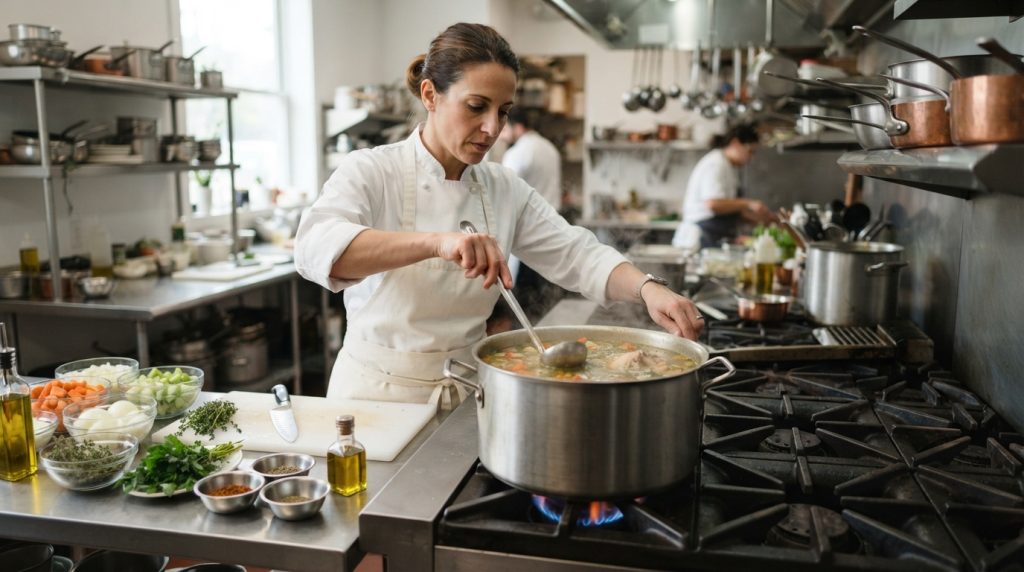
Important considerations include:
Recipe Consistency
The same core recipe should produce a recognizable result from one visit to another.
Ingredient Quality
Ingredients influence the final flavor and texture of the soup.
Preparation Standards
Professional kitchens need reliable preparation processes to ensure quality and food safety.
The FDA Food Code provides a model for food safety practices in retail and food-service environments.
Why Homemade Soup Can Become a Restaurant Signature
Some soups become closely associated with a particular restaurant because customers repeatedly order and recommend them.
A signature soup can become memorable through:
- Distinctive flavor
- Consistent preparation
- Familiar ingredients
- Generous portions
- Association with the restaurant experience
A well-known soup can also encourage customers to return specifically for that dish.
For diners interested in a homemade soup restaurant, the appeal often comes from finding familiar, comforting food prepared with restaurant-level consistency.
How Soup Complements a Broader Restaurant Menu
Soup does not have to compete with other menu categories. It can complement a restaurant’s broader selection by providing an option for diners who want something lighter or more traditional.

A balanced menu may include:
- Soups
- Salads
- Chicken
- Pasta
- Steak
- Seafood
- Sandwiches
- Desserts
This variety allows different members of a group to choose meals according to their own preferences.
For diners looking for a broader comfort food restaurant, a menu that combines familiar recipes with different entree categories can provide more flexibility.
How Soup Provides a Simple Alternative to Heavier Meals
Not every diner wants a large entree. Soup can provide a satisfying alternative when someone prefers a lighter meal.
Depending on the recipe, soup can offer:
- Warmth without a heavy presentation
- Protein from chicken, meat, beans, or seafood
- Vegetables and other plant ingredients
- Grains or starches for added substance
The flexibility of soup makes it useful across different meal occasions and appetites.
Why Familiar Foods Continue to Matter in Restaurant Dining
Restaurant trends change, but familiar foods continue to have a place on menus because they provide predictability and comfort.
Diners may seek familiar dishes when they want:
- A reliable meal
- Traditional flavors
- Comfort during colder weather
- A meal connected to memories
- Something they already know they enjoy
Soup fits naturally into this category because recipes can remain recognizable while still being prepared in a professional restaurant environment.
Frequently Asked Questions
Why is homemade soup considered comfort food?
Homemade soup is often considered comfort food because it is warm, familiar, satisfying, and associated with home cooking and family meals. Traditional ingredients and recipes can also create memories that make the dish emotionally meaningful.
Is chicken and rice soup a good comfort food?
Chicken and rice soup is a classic comfort food because it combines familiar ingredients such as chicken, rice, vegetables, and broth. The result is a warm and satisfying dish that can work as a starter, side, or lighter meal.
What makes a restaurant soup taste homemade?
Homemade-style restaurant soup can reflect familiar ingredients, traditional recipes, careful preparation, and balanced seasoning. Consistent preparation also helps maintain the same recognizable flavor from one visit to another.
Can soup be a complete meal?
Yes. A soup containing ingredients such as protein, vegetables, grains, pasta, or other substantial components can serve as a complete meal. The appropriate portion and ingredients depend on the recipe and the diner’s appetite.
Why do restaurants offer soup alongside other entrees?
Soup provides another meal option for diners and can serve as an appetizer, side, or lighter main course. It also complements categories such as salads, sandwiches,pasta, chicken, and other entrees.
Conclusion
Homemade soup remains a favorite comfort food because it combines warmth, familiar ingredients, satisfying flavors, and the memories associated with traditional meals. Its versatility allows it to work as a starter, side, or complete meal.
Chicken and rice soup demonstrates why traditional recipes continue to appeal to diners. Simple ingredients can create a satisfying dish when they are combined thoughtfully and prepared consistently.
Whether enjoyed as part of a family dinner or selected as a lighter restaurant meal, soup continues to provide the familiar comfort that makes traditional recipes enduring favorites.