









Unsafe wake boating accident claims in New York may involve passengers thrown inside a boat, kayaks or paddleboards capsizing, dock users falling, swimmers placed at risk, rental boats losing control, or smaller vessels being swamped by waves created by another boat. Wake can disappear within seconds, which makes early evidence especially important. People reviewing claim options after a wake-related injury may use a boating accident lawyer Long Island resource to understand how liability, evidence, insurance, and damages are generally evaluated.
Quick Answer
An unsafe wake boating accident claim usually depends on whether a vessel operator created or crossed wake in a careless way, operated too fast for the waterway, ignored nearby boats or docks, failed to keep a proper lookout, or violated speed restrictions near shore, docks, floats, rafts, or anchored vessels. Important evidence may include witness statements, passenger accounts, photos, videos, GPS data, vessel registration, accident reports, no-wake signage, weather records, marina footage, medical records, and insurance documents.
Key Takeaways
- Wake injuries can happen even when two vessels never collide.
- Smaller vessels, kayaks, canoes, paddleboards, dock users, swimmers, and boat passengers may be especially vulnerable to unsafe wake.
- New York Navigation Law § 45 requires careful and prudent vessel operation and restricts speed near shore, docks, piers, rafts, floats, and anchored or moored vessels in many circumstances. (FindLaw)
- New York boating accident reporting rules may require a written report within five days after certain accidents involving injury, death, disappearance under water, or property damage over $1,000. (FindLaw)
- Wake evidence should be preserved quickly because water conditions change almost immediately.
- Public docks, municipal marinas, public launches, state facilities, or government-controlled waterfront areas may involve shorter notice requirements.
- Insurance coverage may depend on the vessel operator, vessel owner, rental company, marina, public entity, or another responsible party.
Why Wake Accidents Are Different
Wake accidents are different because the dangerous condition may not remain visible after the injury. A damaged dock board or broken stair may still be photographed later, but wake disappears quickly. By the time police, marina staff, or emergency responders arrive, the water surface may look calm.
Wake-related claims may involve:
- A passenger thrown from a seat
- A small boat swamped by a larger vessel
- A kayak or canoe capsizing
- A paddleboarder falling into the water
- A person falling on a dock after wake movement
- A boat striking a dock after being pushed by wake
- A swimmer placed at risk
- A personal watercraft rider losing control
- A passenger injured during sudden wake impact
- A vessel operator crossing another boat’s wake too quickly
Because wake evidence is temporary, statements, videos, GPS data, no-wake signs, and vessel identification can become especially important.
Common Unsafe Wake Accident Scenarios
Wake injuries can happen in open water, channels, marinas, near docks, around anchored vessels, and close to shore. The location often affects which rules, evidence, and responsible parties matter.
Common scenarios include:
- A speedboat creates wake near a marina.
- A large vessel passes too close to a smaller boat.
- A boat crosses another vessel’s wake at unsafe speed.
- A passenger is lifted off a seat and lands hard.
- A kayak capsizes near a boat channel.
- A canoe is swamped by repeated wake.
- A paddleboarder falls near a dock or moored boat.
- Wake causes a docked boat to move suddenly during boarding.
- A boat operator ignores posted no-wake signs.
- A rental boat operator does not know how to slow near other vessels.
- A personal watercraft rider jumps wake too close to another craft.
- A dock user falls when wake rocks the floating dock.
The exact scenario matters because liability may rest with the wake-producing vessel, the injured person’s operator, a rental company, a marina, a dock owner, or several parties together.
Boat Operator Responsibility
Boat operators must account for the waterway, traffic, visibility, nearby vessels, shore conditions, docks, swimmers, and passengers. Wake can become dangerous when an operator travels too fast, passes too closely, ignores signs, or fails to slow near vulnerable areas.
New York Navigation Law § 45 states that vessels must be operated carefully and prudently, prohibits reckless operation, and bars operation at a speed greater than reasonable and prudent under existing conditions and hazards. The statute also restricts vessel speed within 100 feet of shore, docks, piers, rafts, floats, and anchored or moored vessels to five miles per hour in many circumstances. (FindLaw)
Operator negligence may involve:
- Excessive speed
- Passing too close to another boat
- Ignoring no-wake signs
- Creating wake near docks or marinas
- Crossing wake at an unsafe angle
- Failing to warn passengers
- Failing to slow near anchored vessels
- Operating too close to kayaks or paddleboards
- Wake-jumping near other vessels
- Poor lookout
- Distracted operation
- Boating while impaired
A wake claim may ask whether a reasonable operator would have slowed, changed course, warned passengers, avoided the area, or waited for safer conditions.
No-Wake Zones and Speed Restrictions
No-wake zones may be posted near marinas, docks, channels, bridges, launch ramps, swimming areas, or environmentally sensitive areas. A posted sign can become important evidence, but a claim does not always require a posted sign. Even without a sign, a vessel may still be operated unsafely if the speed or wake was unreasonable for the conditions.
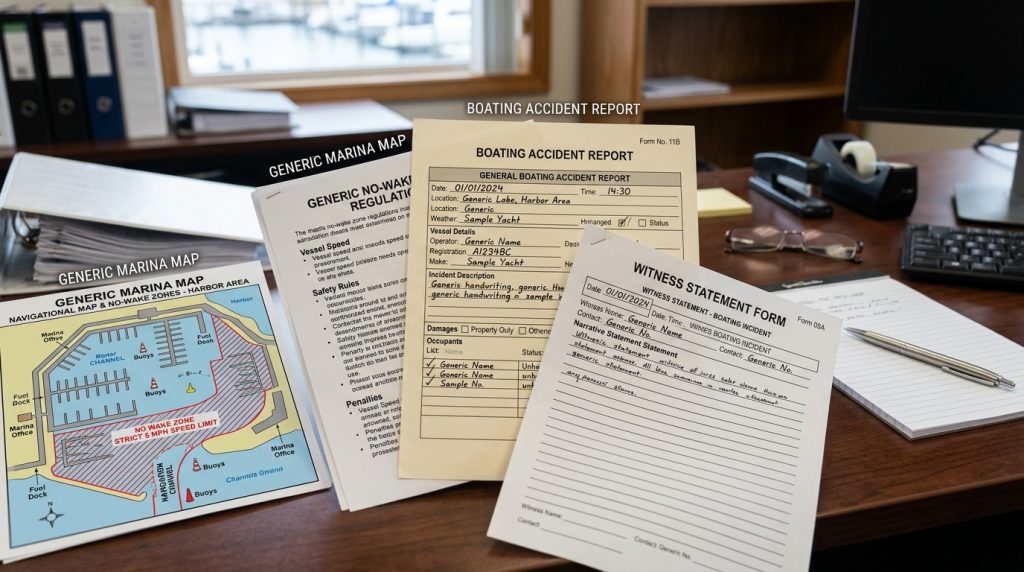
Evidence involving no-wake zones may include:
- Photos of posted signs
- Marina maps
- Local waterway rules
- GPS location
- Witness statements
- Operator admissions
- Vessel speed estimates
- Video footage
- Accident report notes
- Law enforcement observations
A sign helps show what an operator should have known. GPS and video may help show whether the vessel was in or near the restricted area.
Wake Injuries to Boat Passengers
Passengers may be injured when their own boat hits wake too fast or when another vessel creates wake unexpectedly. A passenger may be thrown from a seat, hit a railing, fall on deck, strike another passenger, or suffer neck, back, shoulder, knee, or head injuries.
Passenger-related questions may include:
- Was the operator traveling too fast for wake conditions?
- Were passengers warned before impact?
- Were passengers seated safely?
- Did the operator slow before crossing wake?
- Did another vessel pass too closely?
- Was the wake unusually large for the area?
- Was the boat overloaded?
- Was alcohol involved?
- Did the operator ignore passenger warnings?
A related boat accident attorney guide may help explain why passenger claims often require review of vessel control, operator conduct, owner permission, and safety instructions.
Wake Injuries to Kayakers, Canoeists, and Paddleboarders
Kayaks, canoes, and paddleboards are especially vulnerable to wake because they are smaller, lighter, and lower in the water. New York State Parks notes that paddlecraft such as kayaks, canoes, and stand-up paddleboards can sit low in the water and may be difficult for motorized boaters to see. (New York State Parks)
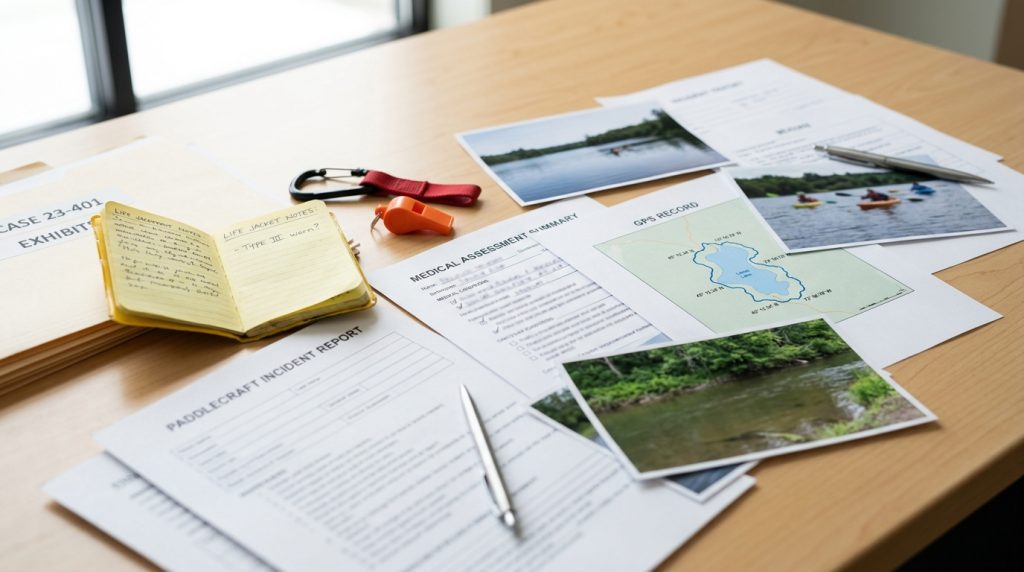
Wake-related paddlecraft claims may involve:
- Motorboat wake capsizing a kayak
- Paddleboarder falling after wake impact
- Canoe swamped in a narrow channel
- Paddler pushed into rocks, docks, or another vessel
- Personal watercraft creating repeated wake near paddlers
- Wake causing a paddler to fall into cold or congested water
A motorboat operator may argue that the paddler was hard to see. That does not automatically end the claim. The full evidence may still show unsafe speed, poor lookout, no-wake violations, or operation too close to smaller vessels.
Wake Injuries Near Docks and Marinas
Wake can cause injuries even when the injured person is not on a moving vessel. A person may fall while boarding, unloading, walking on a floating dock, fueling a boat, stepping between dock and vessel, or standing near a marina edge.
Dock and marina wake injuries may involve:
- Floating dock movement
- Boat movement during boarding
- Passenger fall between boat and dock
- Sudden movement of a tied vessel
- Wake near fuel docks
- Wake near rental staging areas
- Dock user knocked off balance
- Slip or fall during disembarking
A premises liability attorney resource may help readers understand how property control, maintenance, lighting, warning signs, dock design, and marina procedures can overlap with boating-related injury claims.
Wake From Larger Boats
Large boats can create significant wake even when they do not appear to be moving recklessly. The issue is often whether the operator adjusted speed and distance for the location, nearby vessels, and foreseeable hazards.
Large-vessel wake evidence may include:
- Vessel size and type
- Distance from the injured person
- Speed
- Location near shore or docks
- Video of wake impact
- Witness statements
- Marina camera footage
- GPS or AIS-type data when available
- Photos of damaged property
- Passenger accounts
- Weather and current conditions
A large vessel does not need to collide with another boat to cause injury. Wake alone may create liability when it was unreasonable under the circumstances.
Personal Watercraft and Wake-Jumping
Personal watercraft can create wake-related risks when riders operate too close to other vessels, jump wake, cut across traffic, or ride near swimmers and paddlers. These claims may involve operator inexperience, rental instruction issues, lanyard use, speed, or failure to keep distance.
Personal watercraft wake issues may include:
- Wake-jumping too close to boats
- Cutting across another vessel’s path
- Rider ejection
- Passenger ejection
- Collision after wake jump
- Paddlecraft capsizing
- Operation near docks or swimmers
- Rental company instruction failures
New York State Parks states that personal watercraft operators and passengers must wear an appropriately sized U.S. Coast Guard-approved life jacket intended for personal watercraft use. (New York State Parks) Safety equipment evidence may matter when a wake-related PWC accident causes ejection, drowning risk, or delayed rescue.
Rental Boat Wake Accidents
Rental boat wake claims may involve both the renter and the rental company. A renter may not understand how wake affects smaller vessels, docks, passengers, or personal watercraft. A rental company may be reviewed when instruction, safety warnings, operating boundaries, or rental supervision are questioned.
Rental-related evidence may include:
- Rental agreement
- Safety instruction checklist
- Operating boundary map
- No-wake zone instructions
- Authorized operator records
- Age and identification records
- Vessel inspection forms
- Employee statements
- GPS or tracking data
- Incident report
- Insurance documents
A rental company is not automatically responsible for every renter’s wake, but poor instruction, missing safety warnings, or unsafe rental practices may raise liability questions.
Owner Liability When Someone Else Operates the Boat
The person creating unsafe wake may not own the boat. The vessel may be borrowed, rented, used by a family member, operated by a friend, or controlled by a business.
New York Navigation Law § 48 addresses owner liability when death, personal injury, or property damage results from negligent vessel operation by someone operating with the owner’s express or implied permission. (Justia Law)
Owner-related questions may include:
- Who owned the vessel?
- Did the operator have permission?
- Was permission express or implied?
- Was the operator experienced?
- Did the owner know the operator was unsafe or impaired?
- Was the vessel insured?
- Was the vessel used privately, commercially, or as a rental?
- Were safety instructions or restrictions provided?
Ownership and permission may affect both liability and insurance coverage.
Injuries Commonly Caused by Unsafe Wake
Wake accidents can cause serious injuries even without direct collision. A person may be thrown, slammed into a surface, submerged, struck by equipment, or injured while trying to regain balance.
Common wake-related injuries may include:
- Concussions
- Traumatic brain injuries
- Neck injuries
- Back injuries
- Shoulder injuries
- Knee injuries
- Hip injuries
- Wrist fractures
- Spinal injuries
- Soft tissue injuries
- Lacerations
- Drowning-related injuries
- Near-drowning complications
- Hypothermia
- Psychological trauma
- Wrongful death in severe cases
Medical records help show when symptoms began, what injuries were diagnosed, what treatment was needed, and how the injury affected daily life or work.
Accident Reporting After an Unsafe Wake Injury
A wake-related boating accident may need to be reported if it meets New York reporting requirements. New York Navigation Law § 47-B requires written reporting within five days after a vessel accident involving death, injury, disappearance under water, or property damage to any one person over $1,000. (FindLaw)
A boating accident report may document:
- Date and time
- Waterway or marina location
- Vessel operator
- Vessel owner
- Vessel registration
- Injury details
- Property damage
- Weather and water conditions
- Witnesses
- Law enforcement involvement
- Emergency response details
The report may not fully capture wake evidence, so photos, videos, GPS data, and witness statements can still be essential.
Evidence That Can Strengthen an Unsafe Wake Claim
Unsafe wake claims depend heavily on early evidence because the wake itself disappears quickly.
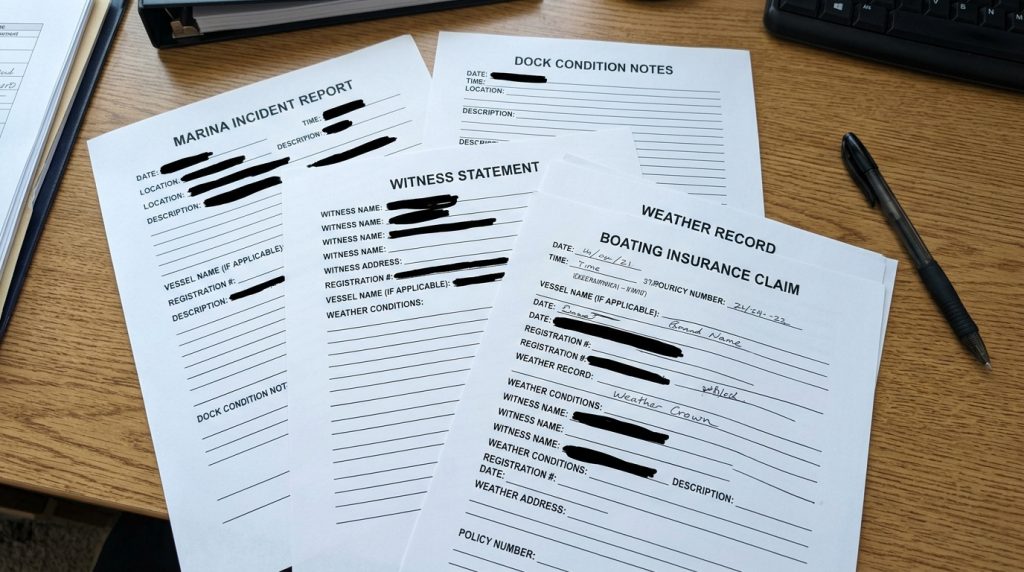
Helpful evidence may include:
- Boating accident report
- Photos or videos of the wake
- Photos of vessel damage
- Photos of dock or marina conditions
- Photos of safety equipment
- Witness names and contact details
- Passenger statements
- Operator information
- Vessel owner information
- Vessel registration records
- GPS or chartplotter data
- Phone videos and timestamps
- No-wake signage photos
- Marina camera footage
- Rental documents
- Weather and water condition records
- Medical records
- Insurance letters
- Expert inspection or reconstruction findings
For broader documentation planning, readers may review how evidence for personal injury claims can help connect accident facts, injury, responsible parties, and damages.
GPS, Video, and Witness Evidence
GPS, video, and witness evidence are especially useful in wake claims. They may show vessel speed, location, direction, distance, timing, and whether the operator passed too close to smaller vessels or docks.
Useful digital evidence may include:
- GPS tracks
- Chartplotter data
- Phone location history
- Video timestamps
- Marina surveillance
- Action camera footage
- Dock camera footage
- Photos with metadata
- Text messages after the incident
- Emergency call records
Witnesses may include passengers, nearby boaters, marina workers, dock users, anglers, paddlers, shoreline observers, or staff at waterfront businesses.
Weather and Water Condition Evidence
Weather can affect wake claims because wind, tide, current, traffic, and visibility may increase risk. An operator may still need to slow down or adjust route when conditions make wake more dangerous.
Useful weather and water evidence may include:
- Marine forecasts
- Wind records
- Tide and current information
- Rain or visibility conditions
- Photos of water traffic
- Video of wave conditions
- Witness descriptions
- No-wake zone maps
- Marina warnings
- Operator statements
Weather does not automatically excuse a wake accident. The question may be whether the operator acted reasonably under the conditions.
Medical Records and Damages
Medical records are central in wake-related injury claims because the injury may not be obvious from vessel damage alone. A passenger thrown inside a boat or a paddler capsized by wake may have serious injuries even without a collision.
Important medical documentation may include:
- Emergency medical services records
- Emergency room records
- Hospital records
- Imaging reports
- Specialist notes
- Surgery records
- Physical therapy records
- Pain management notes
- Prescription receipts
- Work restriction notes
- Medical bills
- Future care recommendations
Damages may include medical expenses, lost income, reduced earning capacity, pain and suffering, future care, scarring, disability, and other documented losses depending on the facts.
Insurance Coverage in Unsafe Wake Claims
Insurance coverage may depend on who created the wake, who owned the vessel, whether the vessel was rented, whether the operator had permission, and whether the injury happened near a marina, dock, public launch, or commercial vessel.
Potential insurance sources may include:
- Boat insurance
- Vessel owner policy
- Homeowner’s insurance
- Umbrella coverage
- Rental company insurance
- Marina liability insurance
- Charter or commercial vessel coverage
- Public entity coverage in limited cases
- Product liability coverage when equipment failure contributed
Insurance companies may dispute the source of the wake, the severity of injury, comparative fault, vessel distance, speed, visibility, or whether the operator acted reasonably.
Comparative Fault and Blame Arguments
Defendants and insurers may argue that the injured person contributed to the accident. They may claim a passenger stood up, a paddler failed to wear a life jacket, a small vessel entered a channel unsafely, a dock user ignored conditions, or another vessel created the wake.
These arguments do not automatically defeat a claim. Important follow-up questions include:
- Was the wake-producing vessel traveling too fast?
- Was it too close to smaller craft, shore, or docks?
- Was there a posted no-wake area?
- Did the operator keep proper lookout?
- Did the operator ignore vulnerable vessels nearby?
- Did the injured person receive any warning?
- Was the injured person acting reasonably under the circumstances?
- Did marina or rental company conduct contribute?
Fault should be evaluated based on the full evidence, not assumptions.
Public Entity Issues
Some unsafe wake claims involve public docks, public launches, municipal marinas, public waterfront facilities, public vessels, state parks, or government-controlled areas. These cases may involve special notice rules.
New York General Municipal Law § 50-E generally requires a notice of claim within 90 days when notice is required for certain tort claims against public corporations.
Public entity evidence may include:
- Exact accident location
- Public agency name
- Facility signage
- Incident reports
- Dock or marina records
- Prior complaints
- Photos of the area
- Witness statements
- Surveillance footage
- Weather and water conditions
The exact location should be documented early because public entity deadlines may arrive quickly.
Deadlines for Unsafe Wake Boating Accident Claims
Deadlines depend on the claim type and responsible parties. The New York Courts statute of limitations timetable lists three years for many negligence-based personal injury claims, two years for wrongful death claims, and three years for product liability claims. (New York Courts)
Practical deadlines may arrive sooner. Accident reporting, insurance notice, GPS preservation, witness identification, rental records, marina footage, public entity notice rules, and vessel repair issues may create urgency before the lawsuit deadline.
Common Mistakes After an Unsafe Wake Accident
Some mistakes can make a wake-related claim harder to prove.
Common mistakes include:
- Not reporting a qualifying boating accident
- Not getting medical care promptly
- Not identifying the wake-producing vessel
- Not collecting witness information
- Not photographing no-wake signs
- Not preserving phone videos or GPS data
- Not documenting weather and water conditions
- Not saving rental or marina records
- Not identifying the operator and vessel owner
- Not requesting marina surveillance quickly
- Giving broad insurance statements before facts are clear
- Accepting a quick settlement before injuries are fully known
- Missing public entity notice deadlines
A strong claim usually depends on early documentation, prompt medical care, preserved digital evidence, and identification of every potentially responsible party.
When Legal Guidance May Be Useful
Legal guidance may be useful when an unsafe wake accident causes serious injury, involves a smaller vessel, happens near a dock or marina, involves a rental boat, includes disputed vessel identity, raises insurance issues, or involves public property.
An unsafe wake claim may require review of operator conduct, vessel ownership, no-wake rules, GPS data, witness statements, marina footage, medical records, insurance policies, public entity rules, and deadlines.
People researching local support may review a Farmingdale legal office location when looking for Long Island boating accident claim information. Publicly available personal injury case results may provide general context, although every claim depends on its own facts, evidence, injuries, insurance coverage, and applicable law.
FAQs About Unsafe Wake Boating Accident Claims
Can a boat operator be liable for injuries caused by wake?
Yes. A boat operator may be liable if unsafe speed, poor lookout, passing too closely, ignoring no-wake areas, or reckless operation caused wake that injured a passenger, paddler, dock user, swimmer, or person on another vessel.
What evidence helps prove an unsafe wake claim?
Helpful evidence may include witness statements, phone videos, photos, GPS data, no-wake signage, marina surveillance, accident reports, operator and owner information, vessel registration, weather records, medical records, and insurance documents.
Does a wake accident require a collision?
No. A wake accident can cause injury without direct contact between vessels. Wake may throw passengers, capsize paddlecraft, move docked boats, cause falls during boarding, or create drowning risk.
Can a rental boat company be responsible for unsafe wake?
A rental company may be reviewed if poor instruction, unsafe rental practices, failure to explain no-wake zones, incomplete safety warnings, or inadequate supervision contributed to the accident. The renter’s conduct and rental company records may both matter.
How long does someone have to file an unsafe wake claim in New York?
The deadline depends on the claim type and responsible party. Many New York negligence-based injury claims have a three-year limitations period, but wrongful death, public entity, insurance notice, accident reporting, and evidence preservation issues may involve shorter timelines.
Final Thoughts
Unsafe wake boating accident claims in New York require careful investigation because the most important evidence may disappear quickly. The strongest claims usually depend on identifying the wake-producing vessel, documenting speed and location, preserving photos or videos, collecting witness statements, saving GPS data, documenting no-wake signs, obtaining medical records, reviewing insurance coverage, and building a clear timeline showing how wake caused the injury.