




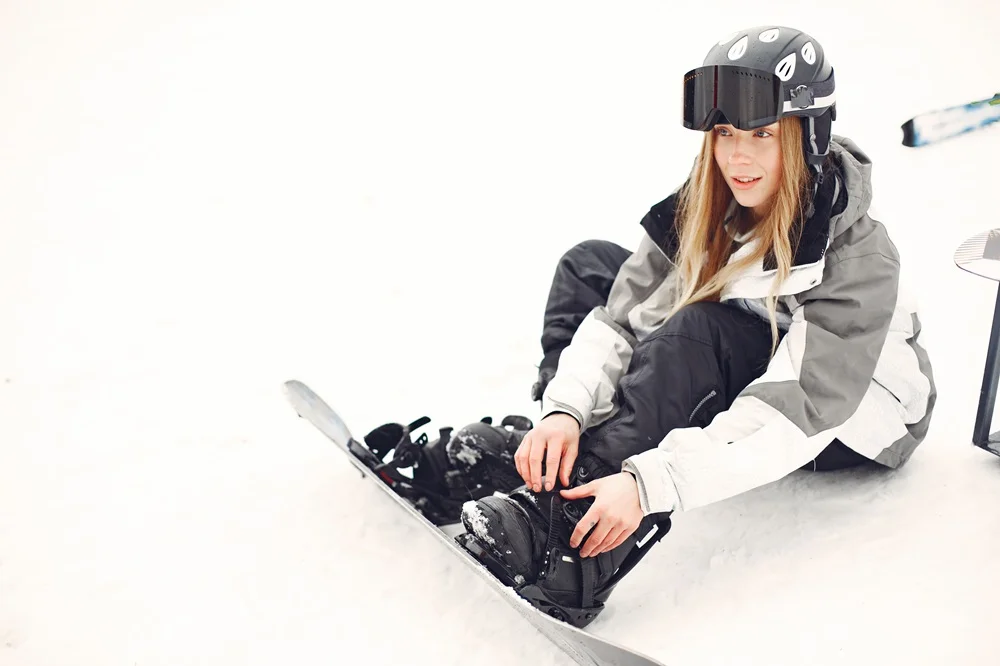
Your boots felt perfect at the shop. Ten days later, your heel lifts with every turn and your toes go numb from overtightening the laces.
This happens to countless riders every season, especially with snowboard boots burton womens and other popular models.
The foam inside compresses faster than you’d expect, and the quick fix everyone suggests—heat molding—often makes things worse.
What Actually Happens When Boots Pack Out
Boot packing happens when the foam liner compresses from your body weight and movement. EVA foam, which most boot liners use, loses about 15 to 25 percent of its volume within the first 5 to 15 days of riding.
Your foot applies roughly three to five times your body weight in force during aggressive turns. That constant pressure breaks down the foam cells. The areas that compress fastest are the footbed, the ankle pocket, and the area around your shin.
Women’s boots often pack out faster because manufacturers use softer flex ratings. A medium flex women’s boot uses less dense foam than a men’s boot with the same flex rating. Softer foam feels comfortable initially but compresses more quickly under repeated stress.
Heat Molding Sounds Good But Has Limits
Shops push heat molding as the solution to everything. You bake your liners in a special oven, put them on, and let them cool around your feet. The theory is that the foam molds to your exact foot shape.
Here’s the problem: heat molding works great for initial fit issues like pressure points or narrow spots. But it doesn’t add volume back to foam that’s already compressed.
When you heat already-packed-out liners, you’re just reshaping less foam. The result often feels better for one or two days, then the boots feel even looser than before.
Research on foam compression shows that heating compressed foam doesn’t restore its original density. You’re working with whatever foam volume remains after packing out. That’s why riders who heat mold packed-out boots usually regret it within a week.
How Do Footbeds Actually Help?
Custom or aftermarket footbeds do more than people realize. They serve two purposes when boots pack out: they take up space and they redistribute pressure.
A quality footbed adds 3 to 5 millimeters of height under your foot. That doesn’t sound like much, but it makes a real difference in how your heel sits in the boot.
More importantly, footbeds with proper arch support spread your weight across your entire foot instead of concentrating it in a few spots.
Studies on boot fit show that proper footbeds can reduce heel lift by up to 40 percent even in boots that have packed out significantly. The key is choosing footbeds with enough volume to fill the space without making your boots uncomfortably tight.
You’ll find three main types: heat-moldable custom footbeds, semi-custom options, and off-the-shelf insoles. For packed-out boots, you want something with substantial volume—not the thin insoles that come stock in most boots.
What About Adding Extra Padding?
You can add material to packed-out areas to restore fit. This works better than heat molding because you’re actually adding volume instead of just reshaping what’s there.
The most common spots to add padding are behind your heel, around your ankle bones, and along the top of your foot. Neoprene pads or foam strips from hardware stores work fine. You can also buy boot-specific padding designed for this purpose.
Here’s what works for different problem areas:
| Problem | Solution | Material Thickness |
| Heel lift | Pad behind heel and ankle | 3-5mm neoprene |
| Loose ankle | J-bars or ankle pads | 5-8mm foam |
| Too much toe room | Toe cap padding | 2-3mm foam |
| General volume loss | Thicker footbed + strategic padding | Varies by need |
The trick is adding padding gradually. Start with thin materials and build up if needed. Too much padding creates new pressure points and restricts blood flow.
Can Different Lacing Techniques Make a Difference?
How you tighten your boots matters more than most riders think. When boots pack out, changing your lacing pattern can help compensate for the lost volume.
For traditional lace boots, try the “lock lacing” technique on the upper zones. This creates friction points that prevent the laces from loosening during riding. You basically create a loop at one eyelet that locks the lace tension for everything below it.
With BOA or speed lace systems, you’re more limited. But you can adjust which zones you tighten most. If your heel lifts, focus on cinching the lower zone tight while keeping the upper zone looser for flex. This pulls your heel back into the pocket.
Data from boot fit specialists shows that proper lacing can improve retention by 20 to 30 percent in boots with mild to moderate pack out. It’s not a permanent fix, but it extends the usable life of your boots.
Should You Just Size Down Instead?
Some riders buy boots half a size smaller to account for packing out. This seems logical but creates different problems. Boots that fit too small compress your toes and restrict circulation. You’ll deal with numb feet and pain that no amount of breaking in will fix.
The better approach is buying your true size and planning to address pack out when it happens. Most quality boots should give you 30 to 50 days of riding before they pack out significantly. Cheaper boots might only last 10 to 20 days.

What Works Best for Snowboard Boots Burton Womens and Similar Models
If you’re dealing with packed-out boots right now, here’s what actually helps: Start with a quality aftermarket footbed.
This gives you immediate improvement for about $50 to $80. Then add targeted padding to specific loose areas—heel and ankle pads make the biggest difference.
Save heat molding for boots that fit too tight in specific spots, not boots that feel too loose overall. And accept that boots with significant pack out might just need replacing. Foam that’s lost 30 percent or more of its volume can’t be fully restored with any trick.
Most riders get one to two seasons from their boots before pack out becomes unfixable.
If you’re riding more than 40 days per season, expect to replace your snowboard boots annually. That’s not a flaw—it’s just how foam materials work under constant compression and temperature changes.
Frequently Asked Questions
Why did my boots feel perfect at first but loose after just a few days?
Answer: Because the EVA foam liner compresses quickly—about 15–25% in the first 5–15 days of riding. As the foam packs out, your heel lifts, and you tighten laces more to compensate, which causes numb toes.
Will heat molding fix loose or packed-out boots?
Answer: Not really. Heat molding reshapes foam but can’t add volume back once it’s compressed. In many cases, heat-molded packed-out liners feel good for a day or two, then become even looser.
Do footbeds actually help with heel lift?
Answer: Yes. A good aftermarket footbed adds 3–5 mm of height and redistributes pressure, which can reduce heel lift by up to 40% in packed-out boots.
What’s the best way to fix specific loose areas in my boots?
Answer: Add padding where needed:
- Heel lift: 3–5 mm neoprene behind heel
- Loose ankles: 5–8 mm ankle pads/J-bars
- Extra toe room: 2–3 mm toe cap padding
Padding works because you’re adding volume, not reshaping compressed foam.
Should I size down to avoid pack-out?
Answer: No. Sizing down causes constant toe pressure and numbness. Instead, buy your true size, expect some pack-out after 30–50 days, and manage it with footbeds, padding, and proper lacing.