


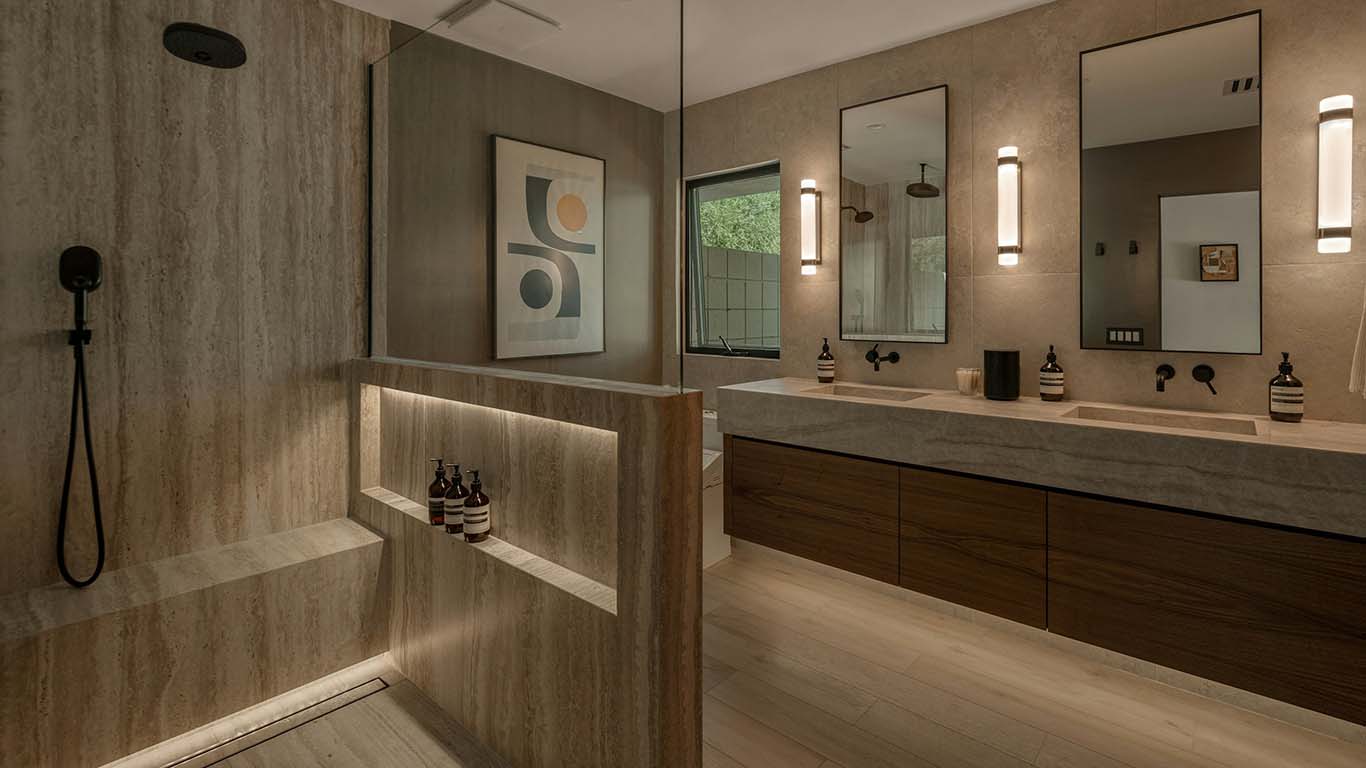
Bathroom settings require surfaces that are resistant to moisture, heat and frequent washing without having to deteriorate. Old fashioned tile systems usually break down because of the erosion of the grouts and the infiltration of water that cannot be seen.
Contemporary construction is leaning towards seamless wall solutions in a bid to be reliable. Wall panels solve performance lapses experienced in the old bathroom designs. Bathroom tub walls provide a uniform protection against moisture intrusion.
The predictability of high-use bathrooms is appreciated by the builders and facility managers. Knowledge of system qualities is useful in avoiding improper specification and sustainable outcomes of different property types.
Structural Performance Concerns
Wall panel systems should be structurally stable even when they are exposed to continuous moisture. Rigidity on the panel has an influence on flexing and impact stress resistance. Dense cores are more effective used in active home serge.
Thermal expansion resistance eliminates the separation of seams with time. There is redistribution of loads among wall substrates and this decreases the risk of localized failure. Surface adhesion strength should not be the only criteria used by panels.
Framing structural compatibility provides a good fit and movement. Good structural performance decreases the frequency of repairs as well as decreases the lifecycle costs incurred by property owners.
Ability To Co-Exist With Existing Walls
The renovation projects usually entail the incorporation of the prevailing wall conditions. There are various panels which are suitable to be mounted directly over tile or drywall. The moisture rating of substrates affects the installation methods that can be accepted.
Curved walls have to be made straight in order to avoid distortion in the panels. Adjustment of thickness influences transitions around fixtures and trims. Seam integrity and quality of appearance are determined by cutting accuracy.
Tolerance of installation is different in manufacturers and materials. Proper compatibility test prevents failure to adhesion and visual discrepancy. Planning compatibility save time and makes sure that one fulfills the requirements of the installation.
Huber Wetness Dependability
The long run moisture management safeguards the surface finishes and the internal wall assembly, shower and tub panel walls offer non-porous walls that do not absorb water. Constant surfaces kill the leakage paths of grouts.
The sealed seams do not allow the flow of vapors into wall cavities. Cladding ensures that surfaces resist constant exposure to cleaning agents. Minimized moisture movement will restrain molding at the back of panels.
Dependable dampness oversees sounder indoor environment. Regular use minimizes the risk of structural decay in bathrooms that have an exposure to water daily.
Impact Of Operational Maintenance
The expectations on maintenance have a direct impact on the efficiency of operations in residential and commercial property. Finishes on the panels are smooth, which discourages the accumulation of residues of soaps and minerals.
Household cleanup is not complicated with harsh scrubbing. The grout free systems reduce the number of workers required to a large extent. Aesthetic performance combats the recurrent sanitary degradation or visual deterioration.
Chemical resistance guarantees compatibility with disinfectants that are approved. Less maintenance requirements enhance customer satisfaction and property maintenance levels. Initial panel investment decisions are usually long-term operational savings.
Design Flexibility Of Integration
Aesthetic flexibility facilitates uniformity in bathroom design results on the project. The panels come with a neutral and textured surface finish. Smooth designs provide clear lines of visual representation around fixtures.
Trim options enable the covered joints to be professional. Nonstandard layouts and retrofit installations are assisted by custom sizing. The stability of color maintains the look when the color is exposed to bright light.
Design flexibility is making sure that it is in tandem with changing standards of the interior. Mitigated aesthetics and functionality improve the perception of property value.
Conclusion
Performance, compatibility and maintenance priorities are to be having an understanding of selecting proper wall systems. The issues of material and structure have an impact on the long-term reliability.
Adequacy In keeping the building dry is a key focus in building protection. Installation planning makes sure that panels work. The ease of maintenance contributes to the standard of hygiene and efficiency.
Well informed decisions reduce the number of repairs and inconveniences in the future. The right assessment provides sustainable bathroom conditions that meet the demands of the contemporary construction.